Xi’s Absence at UN Gathering Highlights Beijing’s Washington Focus
China’s vice-president used the UN General Assembly to urge respect for Middle Eastern sovereignty and support for a two-state solution, while Xi Jinping stayed away from the annual gathering. Analysts had viewed the anniversary meeting as an opportunity for the Chinese leader to appear in person.
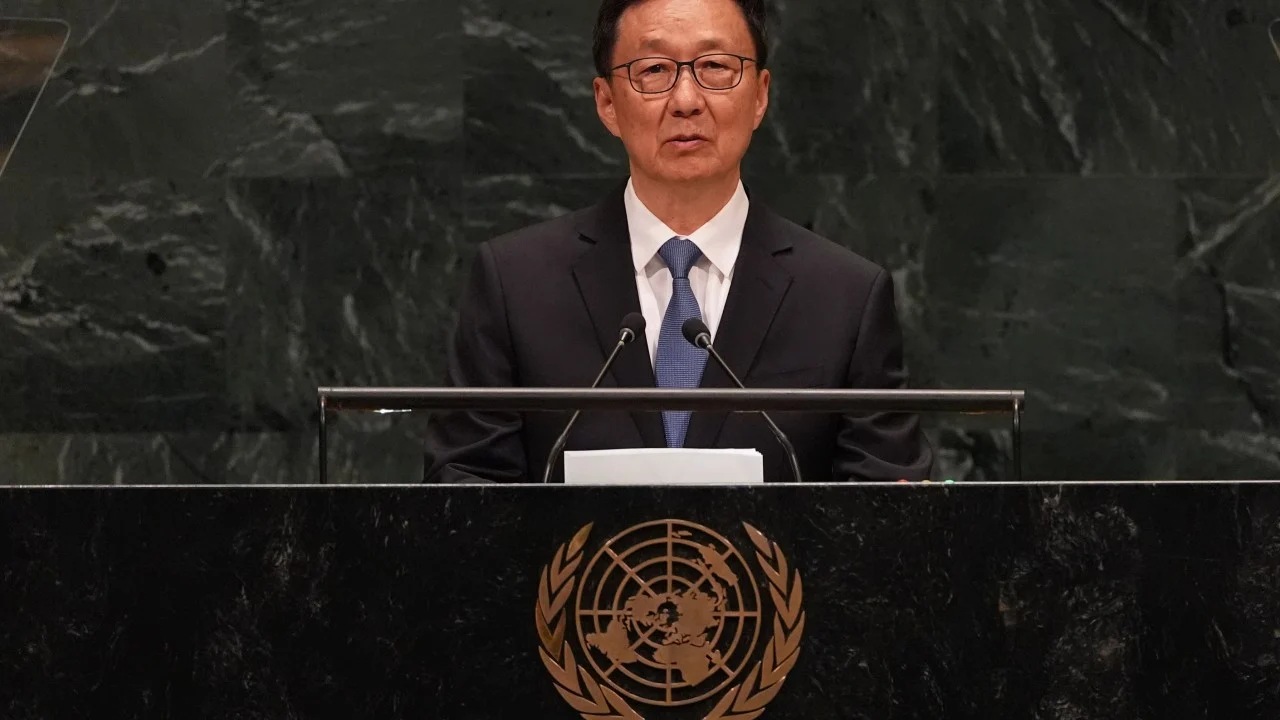
Chinese Vice-President Han Zheng used his address to the United Nations General Assembly on Saturday to call on major powers to respect the sovereignty and security of countries in the Middle East and to advance a two-state solution to the Israeli-Palestinian conflict. His remarks carried an implicit criticism of the United States and Israel, though he did not name them in the appeal described in the account.
The speech put Beijing’s stated support for multilateral diplomacy on display at a major international forum. China has presented itself as an advocate of a world order in which national sovereignty is respected and global disputes are addressed through international institutions. Han’s comments linked that position to the Middle East, where China has called for a political settlement to the Palestinian issue.
President Xi Jinping, however, did not attend the gathering in person. Bonnie Glaser, managing director of the German Marshall Fund of the United States, said Chinese officials had indicated months earlier that Xi would travel to the United Nations only for a major anniversary. She considered his absence a lost chance for the Chinese leader to make a direct appearance on the international stage.
The meeting marked the UN General Assembly’s 80th anniversary, adding significance to the question of whether Xi would attend. Since taking power in 2012, he has addressed the assembly in person only once: in 2015, at its 70th-anniversary session. That appearance remains his sole in-person address to the annual gathering during his tenure.
The pandemic changed the format of his participation for two consecutive years. Xi delivered remarks by video in 2020 and again in 2021, when international travel and major meetings were heavily affected by Covid-19. Those remote appearances were followed by a continued pattern of delegating China’s representation to other senior officials.
Xi also missed last year’s 80th-anniversary session, where China was represented by Premier Li Qiang. In other years, Beijing has generally sent senior figures rather than the president, including Han and Foreign Minister Wang Yi. The pattern places Han’s latest address within a broader approach in which China maintains a prominent presence at the assembly without Xi regularly attending in person.
The absence comes as Beijing promotes multilateralism and seeks to expand its international influence while giving greater weight to its relationship with Washington. Han’s intervention addressed a major regional conflict and conveyed China’s diplomatic position, but Xi’s nonattendance meant the message was delivered by the vice-president rather than the country’s top leader. The account provides no indication of whether Xi plans to attend a future General Assembly session.