Research papers point to possible BeiDou satellite refuelling in orbit
Chinese researchers say an operation in February last year provided room-temperature propellant to a high-orbit BeiDou satellite, a milestone that could carry military significance. They offered few details and said more advanced fuel-transfer technology remains necessary.
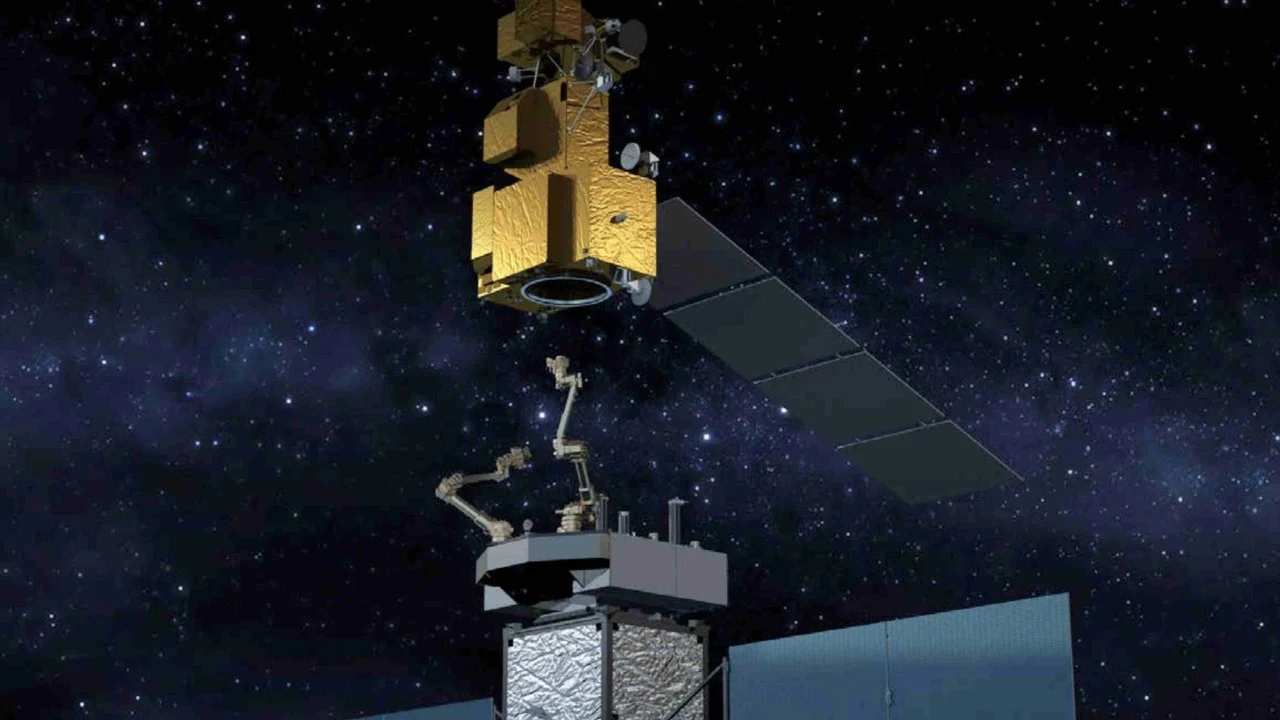
China may have carried out an in-orbit refuelling operation involving one of its BeiDou navigation satellites, according to research papers describing what would be a notable advance in spacecraft operations. The work indicates that the manoeuvre took place in February last year, although the researchers did not disclose how it was performed or identify the satellite involved.
A team from the state-funded Deep Space Exploration Laboratory said in a paper under peer review by the Journal of Deep Space Exploration that China had, for the first time, supplied room-temperature propellant to a BeiDou satellite in a high orbit. The researchers characterised the operation as successful, but provided no further technical account of the transfer.
The reported date places the event in February of the year before the paper’s publication. The available information does not specify the exact day, the quantity of propellant delivered, the spacecraft used to conduct the operation or how the satellite’s performance changed afterward. Those omissions leave key aspects of the achievement unverified in the material provided by the team.
Refuelling a spacecraft after launch can extend its useful life or support operations that would otherwise be limited by the fuel carried from Earth. The reported work is therefore relevant to the practical development of on-orbit servicing, though the researchers did not say that the BeiDou satellite’s mission had been extended or describe any operational outcome beyond the transfer itself.
The possibility also has strategic implications. BeiDou is China’s satellite navigation system, and the researchers’ paper has drawn attention to the military relevance of a capability that could help spacecraft remain in service or be supported in orbit. The researchers did not explain whether the operation was intended for a military purpose, and the information available does not establish how it might affect any particular military capability.
The team said the operation gave China valuable experience in orbital propellant transfer. At the same time, it stressed that room-temperature propellant is not the only technology needed for more ambitious missions. The researchers said development should continue on systems capable of transferring propellants kept at extremely low temperatures.
Such cryogenic propellants can offer better performance, according to the team, and are important for large spacecraft and deep-space missions. Handling them in orbit presents a more demanding engineering challenge than transferring room-temperature fuel, making the researchers’ stated next step a significant one for future refuelling work.
The paper remains under peer review, and the researchers have not released details that would allow independent assessment of the operation’s methods or results. Their account nevertheless describes an initial achievement alongside a clear limitation: China has reported a room-temperature transfer to a high-orbit BeiDou satellite, while more capable low-temperature refuelling technology remains to be developed.