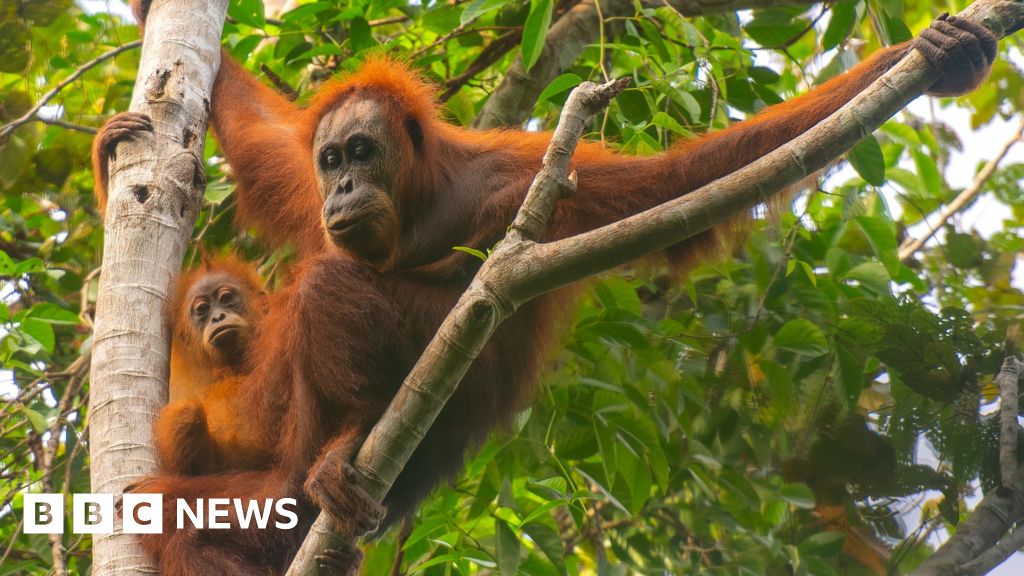
Biodiversity at Risk: How Severe Weather Impacts Critically Endangered Great Apes
Recent scientific research highlights a deeply troubling connection between extreme weather patterns and the survival rates of the world’s rarest great ape species. An investigation focused on a specific population of orangutans in Sumatra has estimated significant losses following severe rainfall and ensuing landslides. These findings underscore that seemingly natural disasters can inflict direct, devastating blows to highly vulnerable wildlife communities.
The study suggests that a substantial proportion of the critically endangered Tapanuli orangutan population perished during a major cyclonic event in the region. Experts caution that the calculated mortality rate represents a conservative minimum, failing to account for secondary impacts such as severe habitat damage from falling tree canopies or drastic reductions in the availability of crucial food sources. The incident serves as a stark warning about the cumulative pressures facing fragile tropical ecosystems.
What This Means for Conservation Efforts
The implications of these findings are profound, shifting conservation focus toward climate resilience. When natural forces interact with already diminished habitats, the impact on apex wildlife can be catastrophic. Beyond immediate population decline, the loss of an entire localized group compromises genetic diversity, making the surviving population inherently more vulnerable to future threats. This underscores the urgent need for conservation strategies that integrate climate change mitigation with habitat protection.
The analysis points to a dangerous feedback loop: severe weather degrades the forest structure, leading to starvation or direct physical trauma for the animals, thereby accelerating the pathway toward local extinctions even in areas that appear stable.
Context and Significance of Habitat Loss
Tropical rainforests are characterized by complex ecological balances. When massive landslides occur, they do more than just remove animals; they fundamentally restructure the forest environment. The physical trauma of such events, coupled with the disruption of established foraging routes, incapacitates even robust individuals. Official observations following the weather events noted a dramatic scarcity of these great apes in areas where they were previously sighted, fueling expert concern over potential mass displacement or fatality.
These incidents provide tangible evidence that the immediate threat to these species is not solely poaching or human encroachment, but also the increasing intensity and frequency of severe meteorological events linked to a changing global climate. Protecting these ape populations, therefore, requires a comprehensive approach encompassing forest stabilization, climate adaptation planning, and rigorous monitoring.
About the Author