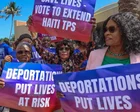
Supreme Court Weighs Legal Authority to Revoke Protected Status for Haitians and Syrians
The legal standing of thousands of immigrants from various nations, including Haiti and Syria, is currently under intense review at the Supreme Court. The central question before the justices revolves around the scope of executive authority: specifically, whether the administration possesses the power to unilaterally eliminate Temporary Protected Status (TPS) for large populations.
This status has historically functioned as a vital safety net, allowing individuals to reside and work in the United States when their home countries are deemed unsafe due to internal conflicts, severe political upheaval, or natural calamities. For those beneficiaries, TPS represents a critical shield against forced removal, providing a measure of stability in an unpredictable situation. The recent scrutiny on the program has brought complex questions of immigration law and executive power to the fore.
The proceedings are examining the legal foundation underpinning the previous efforts to alter or rescind protections granted to groups such as Syrians and Haitians. The outcome of this deliberation could establish significant precedents regarding the government’s ability to modify long-standing protections for vulnerable immigrant communities.
What This Means: Legal Precedents and Stability for Communities
A decision from the Supreme Court carries profound weight, potentially redefining the balance between national security concerns and humanitarian protections. If the Court determines that the executive branch lacks the requisite statutory authority to strip TPS en masse, it could solidify the current protections for numerous immigrant groups. Conversely, a ruling that expands executive discretion could create a volatile legal environment, signaling to these populations that their protected status is subject to unpredictable political shifts and administrative whim.
For the affected communities, the status of TPS dictates not only their right to remain in the country but also their ability to legally work and build lives. The stability provided by the program is directly tied to the legal interpretation of the government’s authority to assess the safety of foreign nations over time.
Background and Context: The Function of Temporary Protected Status
Temporary Protected Status is a mechanism designed by the U.S. government to address acute humanitarian crises in nations abroad. It is not a permanent form of residency but a temporary measure based on external factors—namely, the demonstrated inability of a country to safely shelter its own citizens due to exceptional circumstances. This framework inherently requires the government to continuously reassess the conditions in the nations of origin.
Historically, the designation requires robust evidence documenting ongoing hazards, whether they stem from civil unrest, active conflict zones, or environmental disasters. The recent attempts to alter these protections for multiple nationalities have fueled intense debate among legal experts about the legislative boundaries governing such discretionary programs. The Court’s review thus encompasses not just the immediate ruling, but the underlying constitutional and statutory framework governing such critical immigration relief.
Summary of the Core Legal Question
Ultimately, the legal challenge confronting the justices is whether the designation and subsequent withdrawal of TPS require specific legislative action from Congress, or if the executive branch, through existing departmental authority, possesses sufficient latitude to act alone. The gravity of the arguments suggests that the implications stretch across international law, domestic administrative procedure, and fundamental rights for those residing in the United States under this protective status.
About the Author