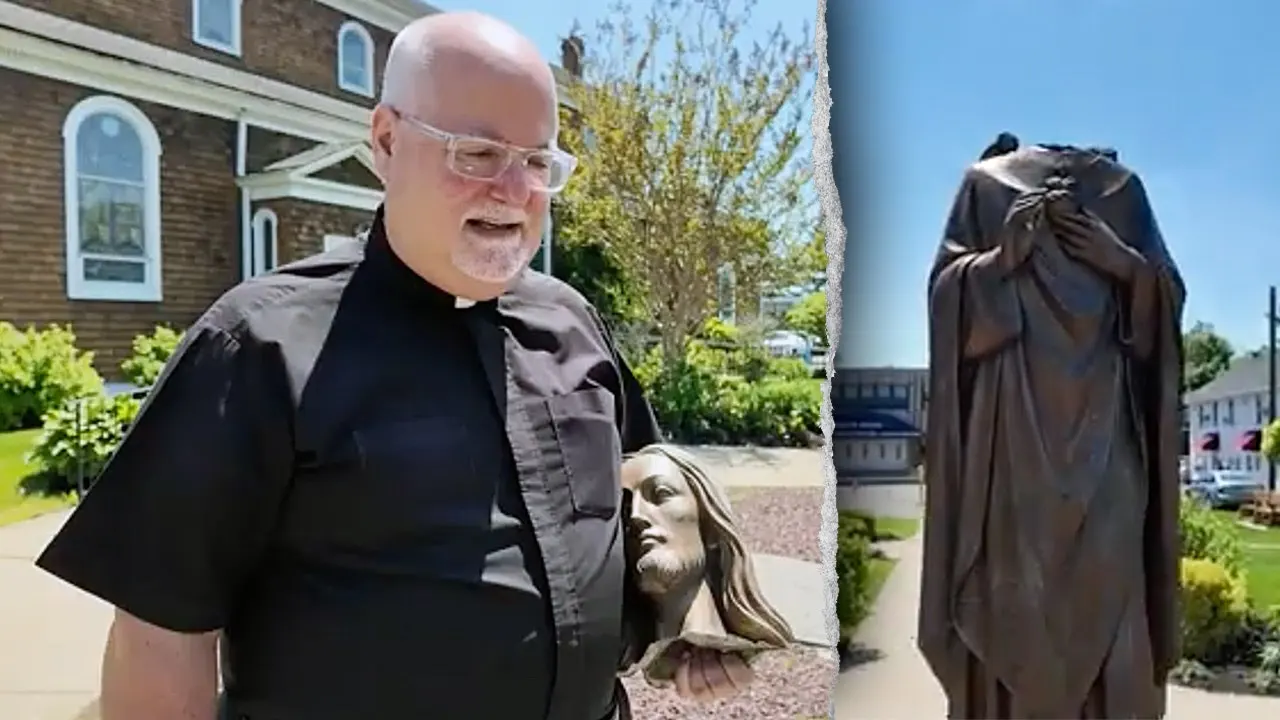
A woman was apprehended by authorities after allegedly vandalizing a statue of Jesus outside a Catholic church in East Islip. The incident brought immediate attention to the damage, which was discovered by members of the congregation during a gathering for First Communion services. Police reports indicate that the damage occurred in the early morning hours, prompting an investigation by specialized law enforcement units.
The individual charged in connection with the desecration was identified and subsequently arrested after detectives traced her movements. She faced charges related to criminal mischief following the damage to the statue, which depicted the Sacred Heart of Jesus. The discovery of the missing head of the religious figure was made public when parishioners arrived at the church premises for family gatherings and religious rites.
What This Means:
This event underscores the sensitivity surrounding religious sites and public displays of faith. The police investigation into the vandalism suggests that the authorities are treating the incident with seriousness, leading to an arrest and formal charges. Such incidents often spark broader conversations within the community regarding the protection of religious property and the implications of public vandalism.
Background / Context:
Religious institutions often serve as central gathering points for local communities, making them sometimes targets for vandalism or criminal mischief. While this specific case involved an alleged act of personal malice, it echoes a pattern of concerns raised by religious leaders regarding the increasing scope of vandalism and desecration affecting houses of worship globally. The swift action by law enforcement, from initial investigation to subsequent arrest, highlights the commitment of local authorities to maintaining order and respect for community landmarks and sacred grounds.
About the Author