A Veteran’s Urgent Appeal: Bridging Generations Through the Memory of Sacrifice
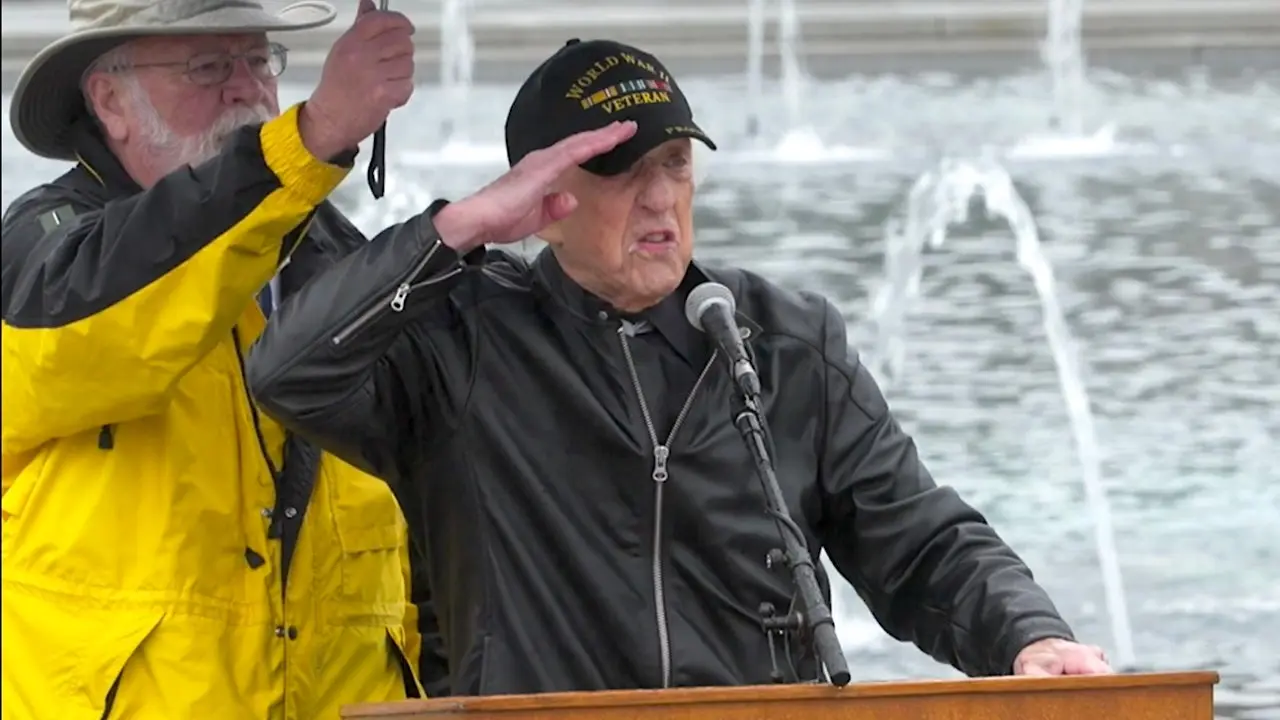
During a recent visit to the National World War II Memorial, a veteran shared a profoundly moving message aimed directly at the younger generation. The veteran spoke about the immense personal sacrifices made by those who served during the Second World War, emphasizing a debt of remembrance that persists decades later. His words suggested that the continuity of sacrifice required a conscious effort to keep history alive, bridging the gap between the experiences of service and the lives of those who benefit from that history.
The core of the address was a powerful reminder of commitment—a sentiment captured in a poignant directive: that the sacrifices of preceding generations were exchanged for the opportunities available in the present. Speaking with evident emotion, the speaker stressed that the stories of service must be actively told to the youth, ensuring that the magnitude of the commitment remains a known and respected part of the national narrative. This call to memory was marked by raw emotion, highlighting the burden and pride carried by those who lived through those formative, defining times.
The Weight of Experience and Loss
The reflection touched upon the sheer scale of the conflict, encompassing the massive number of Americans who served after the attack on Pearl Harbor, alongside the profound losses suffered by those who never returned home. The veteran detailed how the urgency of wartime manpower necessitated an extraordinary measure—lowering the age requirements for military service. This meant that many entering the armed forces were young, sometimes barely past childhood, forever marking a significant pivot point in their development. His remarks illuminated how national necessity forced individuals at the very beginning of life into commitments that fundamentally shaped the course of their existence.
Significance for Modern Society
This address underscores a critical cultural responsibility: ensuring that the sacrifices made during wartime do not become abstract historical footnotes. The veteran’s passionate appeal acts as a call to cultural vigilance, urging the public to take ownership of these narratives. By recounting the personal details—such as the age of entry or the commitment required—the speaker grounds the abstract concept of ‘sacrifice’ in human experience. It serves as a powerful mandate to educate successive generations on the tangible costs paid for contemporary freedoms, fostering a deeper, more empathetic understanding across age groups.
Contextualizing the Call to Remembrance
The commitment described spans decades, representing a period where the nation called upon nearly all available manpower. The memories shared are deeply personal, recounting a time when the very concept of youthful freedom was curtailed by a global conflict. The narrative structure of the speech naturally built toward a poignant challenge: that the legacy of these wartime efforts must be intentionally passed down, not assumed. It speaks to the enduring value of historical testimony as a vital component of national identity preservation.
About the Author