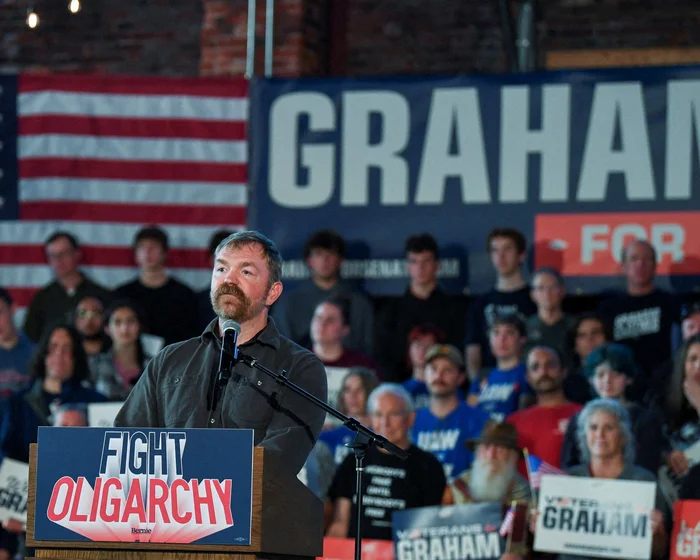
Democratic Representative Ro Khanna recently issued a notably complex public statement regarding the campaign of Maine Senate candidate Graham Platner. Instead of outright endorsement, Khanna offered a qualified defense, acknowledging that Platner’s past conduct involved actions described as deeply inappropriate and problematic. By qualifying his support, Khanna signaled a complex political calculation, recognizing that despite documented instances of behavior deemed misogynistic and regrettable, these past actions did not appear entirely unprecedented within segments of the Maine electorate.
This commentary arrives amid a highly publicized and increasingly scrutinized political contest. Platner, who has established himself with roots in Maine’s local industries, is actively campaigning with the goal of unseating the incumbent Republican senator. The nature of the opposition has focused heavily on scrutinizing Platner’s personal history, bringing to light several specific controversies that have become central to the public discourse surrounding his candidacy.
What This Means: Navigating Contradiction in Modern Campaigns
The dynamics surrounding Khanna’s statement highlight a common tension in modern politics: the difficulty of maintaining a clear ideological line when confronting a candidate with a complicated personal record. For Khanna, the defense suggests that political support can sometimes supersede moral judgment in a localized electoral environment. It forces observers to consider whether voters are basing their support on policy platforms or are more heavily influenced by regional identity, narrative, and the perceived ability of a challenger to disrupt the established political order.
Such mixed signals—acknowledging wrongdoing while still offering support—illustrate the pragmatic maneuvering required in competitive races. It suggests that for Platner’s supporters, the perceived weight of his past actions may be balanced, or even overshadowed, by other political considerations, such as a desire for change within the state’s leadership structure.
Background and Context: The Intensity of the Maine Contest
The effort to challenge the sitting Republican senator has generated significant media attention, turning the campaign into a focused spotlight on both the challenger’s background and the political landscape of Maine. The allegations leveled against Platner have been varied and significant, ranging from concerning communications sent to women during his time as a married individual, to visible markings on his person connected to controversial historical themes. These details have created a pattern of negative press, defining much of the public debate.
These incidents, whether scrutinized deeply or partially dismissed by supporters, serve to frame the narrative surrounding the election. The confluence of these personal controversies and the high stakes of the Senate seat are shaping a contest where political viability is inextricably linked to the management and perception of personal history. The resulting political calculus suggests that while ethical concerns are loud, they are not currently proving to be a decisive barrier to campaigning efforts.
About the Author