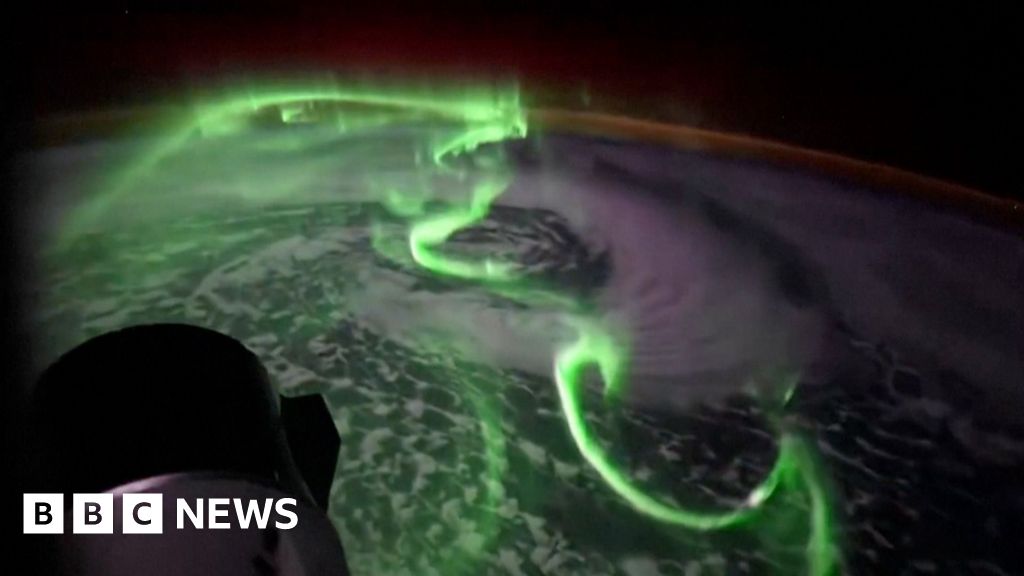
Capturing the Southern Glow: Insights into Earth’s Polar Light Show
Recent footage has offered humanity a unique perspective on natural wonders, showcasing the breathtaking spectacle of the Southern Lights from the vantage point of space. This remarkable display provides a vivid reminder of the powerful cosmic interactions occurring high above the planet’s surface. The visual evidence captured by astronaut Jessica Meir during an orbital mission underscores the ethereal beauty that characterizes Earth’s polar regions.
While the Northern Lights often capture public imagination, the Southern Lights are equally magnificent, frequently visible over areas such as Antarctica. The phenomenon itself is a direct result of fundamental physics: the Earth’s magnetic field acts like a cosmic funnel, directing charged particles emanating from the Sun toward the magnetic poles. These energetic particles subsequently collide with the gases in our upper atmosphere, creating the characteristic, shimmering curtains of color.
Significance of Polar Light Observation
The visibility and study of these polar lights hold importance for both astronomy and understanding our planet’s magnetosphere. The consistent appearance of both the Northern and Southern Lights confirms the predictable nature of solar wind interactions with planetary magnetic fields. Astronaut observations, such as the footage from orbit, not only serve as breathtaking visual documentation but also provide invaluable data points regarding the scale and intensity of these natural atmospheric events.
Broader Context of Space and Earth Observation
Beyond celestial illumination, recent reporting has highlighted multiple complex engineering and natural occurrences from both space exploration and terrestrial wildlife. Large-scale space endeavors continue to mark human ambition, with significant hardware, such as the massive Space Launch System and Orion spacecraft, undergoing intricate preparation and movement to launch sites. Simultaneously, nature continues to provide dramatic moments, ranging from wildlife encounters documented by seasoned naturalists to reports on species conservation challenges faced by animals in fragmented habitats.
These diverse reports collectively illustrate humanity’s enduring fascination with both the vast unknown of space and the intricate biodiversity found on Earth. Whether viewing the shimmering atmospheric glow from an orbital perspective or witnessing rare animal interactions in the wild, the overarching theme remains one of profound natural and scientific wonder.
About the Author