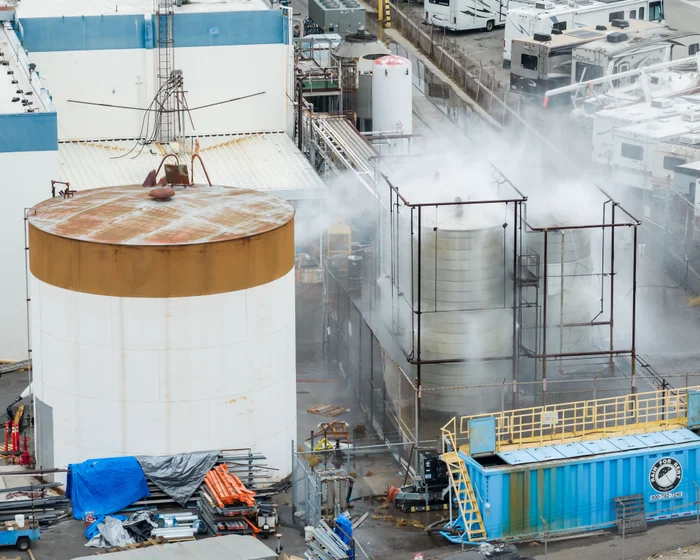
Chemical Storage Incident in California Leads to Massive Evacuation and Heightened Safety Concerns
A significant industrial incident involving a damaged chemical storage tank in Southern California has triggered a major evacuation, prompting authorities to manage the safety of tens of thousands of people. The core concern revolves around the potential for a catastrophic explosion originating from the compromised container, which has required immediate action to protect surrounding communities.
Official responses focused heavily on mitigating the risk posed by the damaged infrastructure. The breakthrough in safety efforts centered on observing that the cracking of the tank appeared to be relieving internal pressures. This structural failure, while itself a serious event, was initially viewed by emergency personnel as a positive indicator in stabilizing the immediate danger zone and reducing the likelihood of a worst-case detonation.
What This Means: A Focus on Public Safety and Infrastructure Resilience
The scale of the evacuation—affecting approximately 50,000 individuals in Garden Grove alone—underscores the severe potential threat posed by the compromised industrial site. The movement of such a large population necessitates complex logistical coordination and sustained public safety management. The incident highlights the critical need for stringent oversight of aging industrial chemical storage facilities, particularly those situated near densely populated urban centers.
Authorities are closely monitoring the situation, focusing on the long-term stability of the area and the chemical agents involved. The initial relief regarding pressure equalization does not signal the end of the response; rather, it marks a shift in focus toward long-term hazard management and community reassurance following a high-stakes emergency.
Context of Chemical Hazards in Urban Environments
The location of such a significant chemical facility, situated in proximity to a sizable residential population, presents inherent risks that emergency planners must continually address. In many metropolitan areas, industrial operations coexist closely with residential zones, meaning any failure at a major industrial point can rapidly escalate into a major civic crisis. The response to this specific event demonstrates the multi-layered nature of disaster preparedness required when dealing with large-scale chemical storage.
The management of the aftermath requires not only engineering assessments of the damaged tank but also careful community engagement to manage panic and maintain public confidence in the region’s safety infrastructure. Experts are examining how current protocols can be improved to allow for faster, more definitive risk assessments when dealing with complex, high-hazard materials.
About the Author




