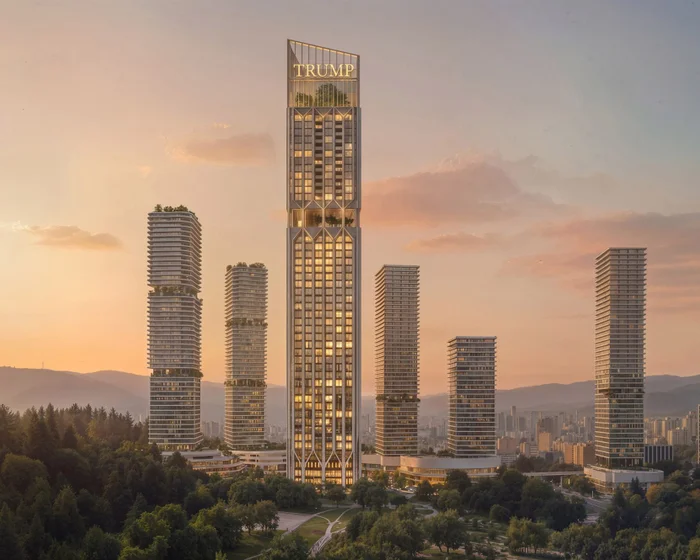
Tbilisi’s Trump Tower Faces Scrutiny Over Land Ownership Ties
A major real estate development slated for Tbilisi, Georgia—a proposed Trump Tower—is drawing significant attention due to questions surrounding the land it occupies. Reports indicate that the site, intended for a skyscraper joint venture involving the Trump Organization, is partially linked to the holdings of a prominent political figure. Specifically, the parcel of land in question is reportedly associated with the son of the current leader, who is subject to U.S. sanctions.
The development plans themselves involve a collaboration between the Trump Organization, managed by Donald Trump Jr. and Eric Trump, and a local consortium. While such ventures typically aim to boost urban infrastructure, the underlying ownership structure has introduced an immediate and noticeable layer of ethical complexity. The official records point to the International Charity Fund Cartu as the registered owner of the plot, but the connection to sanctioned figures suggests a potential conflict of interest that observers are scrutinizing closely.
Significance and Potential Implications
The entanglement of international business interests with politically sensitive land holdings raises substantial governance concerns. The involvement of a figure sanctioned by the United States adds a layer of international scrutiny to what is otherwise framed as a significant commercial investment. For the development to proceed smoothly, stakeholders will likely need to address and clarify these ownership ambiguities. The situation highlights the delicate intersection where commercial enterprise meets political power in developing global markets.
Background Context of the Proposal
The concept of building a high-profile tower bearing the Trump name aims to integrate international branding into the Georgian capital’s skyline. Such projects are often heralded as markers of economic revitalization and foreign investment confidence. However, the background details surrounding the land acquisition—particularly the connection to the family of the country’s leader—suggest that regulatory transparency and adherence to international sanctions compliance will be critical hurdles for the developers and local authorities involved.
About the Author




