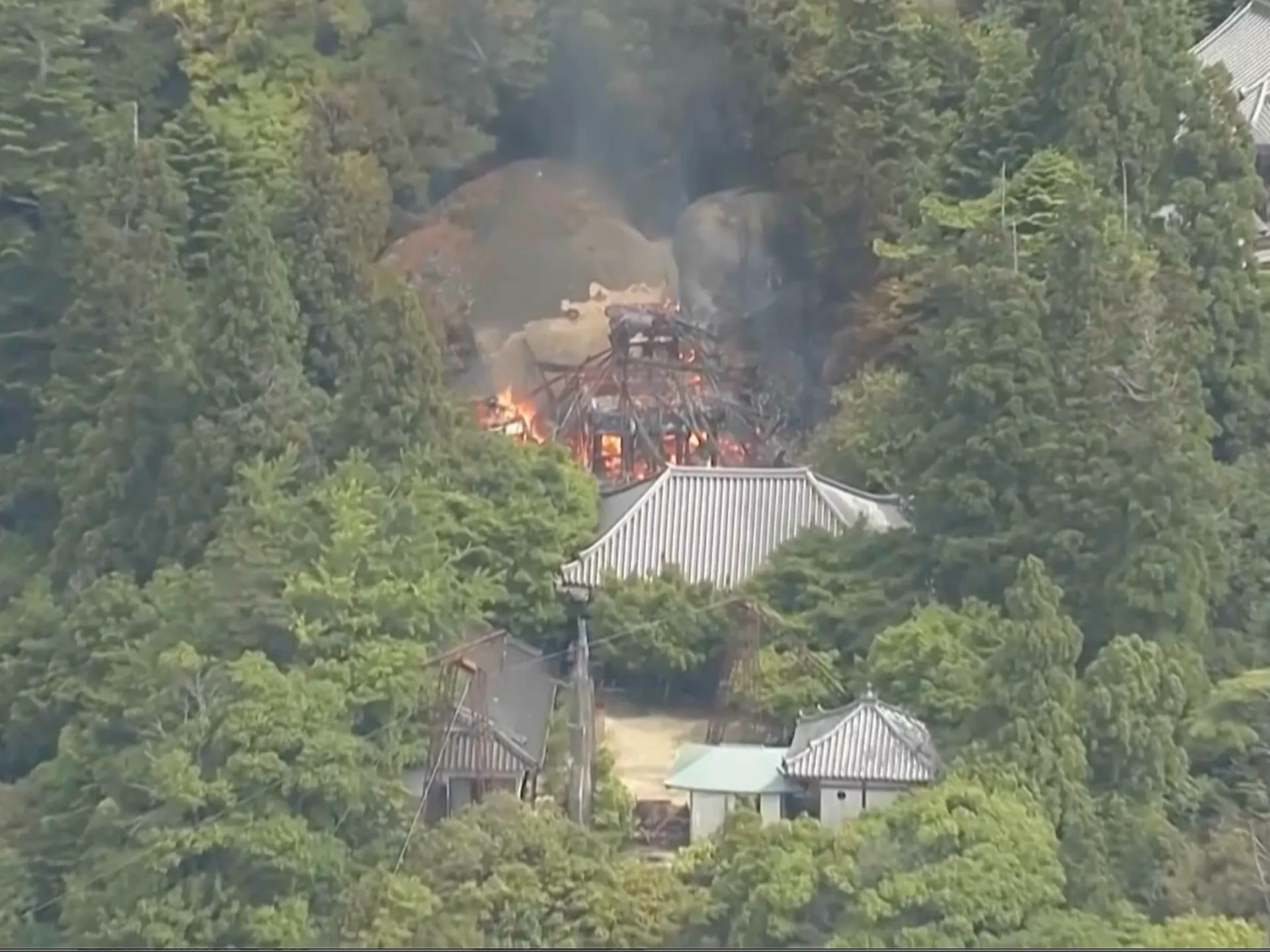
Cultural Loss: Historic Buddhist Temple’s Shrine Housing Ancient Flame Devastated by Fire
A significant cultural landmark on Japan’s Miyajima Island has suffered a devastating setback following a major fire. The structure, which held considerable historical importance to local traditions, was completely engulfed in flames. Of particular note was the fact that the building served as the repository for what was believed to be an ‘eternal flame’—a source of spiritual and cultural significance that locals understood to have been continuously burning for a millennium or more.
The incident has drawn immediate attention to the fragility of historical sites, particularly those that embody long-standing community traditions. The loss is viewed by many observers not merely as the destruction of a physical building, but as the potential severing of a tangible link to the past. The presence of such an ancient, continuously burning feature within the temple added an extraordinary layer of reverence and historical weight to the entire complex.
Understanding the Significance of the Site
The temple complex in question was not just an architectural curiosity; it was deeply integrated into the cultural and spiritual life of the community surrounding Miyajima. The alleged permanence of the central flame meant that the site represented a continuous narrative stretching back over a thousand years. Such sources of purported timeless energy often become focal points for pilgrimage and local ceremony, attracting visitors and instilling a powerful sense of continuity in the cultural identity of the area.
The immediate aftermath of the blaze prompted discussions regarding the preservation methods for such irreplaceable heritage sites. Experts and community members are now focusing on the broader implications of the loss, suggesting that recovery efforts must balance the needs of spiritual observance with modern conservation techniques to prevent future vulnerabilities.
Context of Japan’s Cultural Preservation Challenges
Japan possesses an unparalleled density of ancient religious and cultural sites. However, these very factors—their age, the materials used in their construction, and their deep integration into daily life—make them inherently vulnerable. From natural disasters to accidents, these structures face constant threats. The incident on Miyajima serves as a stark reminder of the constant tension between cultural longevity and physical preservation in a modern world.
Historical buildings of this stature require intricate, specialized maintenance that goes beyond standard renovation. The focus now shifts toward learning from this loss, improving localized safety protocols, and perhaps even exploring new methods for documenting and symbolically preserving the essence of these unique historical treasures, even if the physical structure cannot be fully recovered.
About the Author




