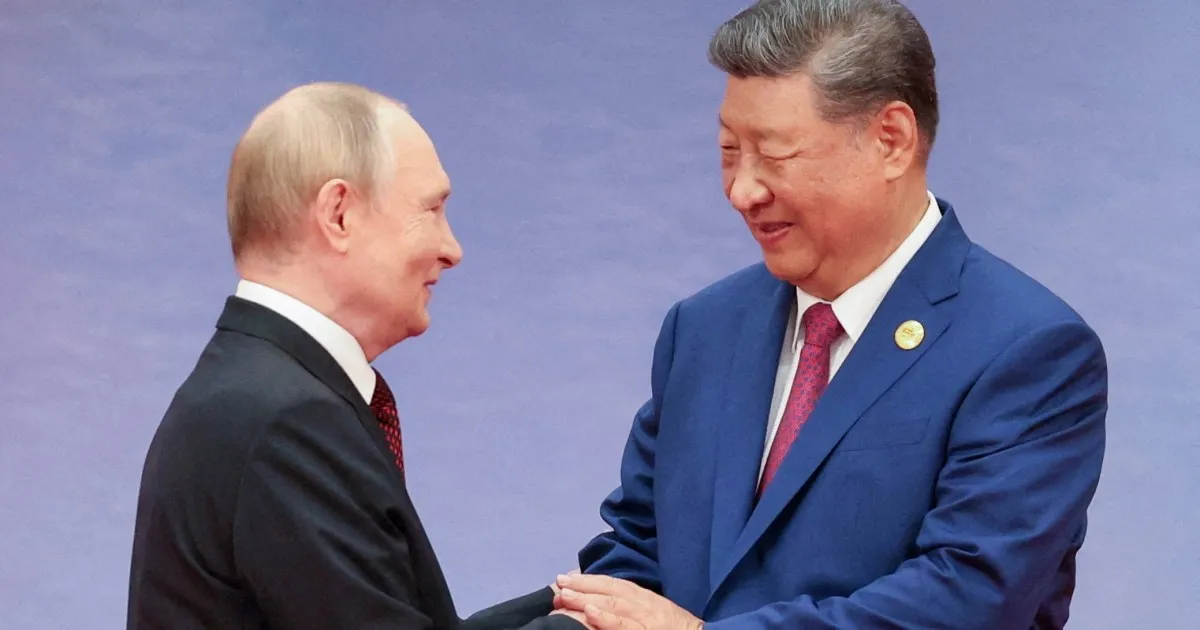
The escalating global geopolitical turbulence has accelerated the strategic alignment between Russia and China. Recent high-level visits between the two nations underscore a deepening partnership that transcends mere diplomatic courtesy. Amid a world characterized by unpredictable international dynamics and increasing economic fragmentation, Moscow and Beijing are solidifying their reliance on one another. This collaborative push is particularly noticeable as both powers seek reliable alternatives to established Western-led economic and political frameworks.
The convergence of strategic interests has made mutual dependency a defining feature of the relationship. Factors such as ongoing conflicts in neighboring regions and heightened concerns over critical global trade choke points have prompted both nations to reinforce ties. For China, securing stable and alternative supply lines, particularly for energy resources, has become a paramount concern. Russia, facing significant international economic pressures and isolation due to geopolitical conflicts, has found in China a crucial avenue for trade and mutual support, making the alignment appear increasingly necessary for the long-term security and economic viability of both states.
The Imperative of Partnership
This intensifying collaboration is built upon addressing shared vulnerabilities in a volatile global market. The partnership allows both countries to navigate a world order perceived by them as increasingly unstable and dominated by external pressures. By deepening ties, the two nations project an image of solid, reliable partnership—a counterweight to the uncertainty characterizing Western foreign policy. Official statements and reports highlight the significance of these repeated engagements, suggesting a mutual commitment to charting a course through geopolitical headwinds together.
A Historical Shift in Relations
Historically, the relationship between Russia and China has been complex, shifting dramatically from periods of shared ideological alignment to intense rivalry. While deep historical currents have existed, the modern focus has shifted entirely toward pragmatic cooperation. Today, their long and extensive border region serves not as a boundary of suspicion, but as a conduit for strategic commerce and mutual economic benefit. This transformation showcases a mature geopolitical calculation, prioritizing shared material needs and strategic security over outdated ideological differences.
What This Means for Global Dynamics
The strengthening bond between Beijing and Moscow carries considerable weight for the global order. It solidifies a major bloc of nations increasingly looking beyond traditional Western alliances for security and trade guarantees. This realignment suggests a persistent trend toward geopolitical polarization, where major economic powers seek to build self-contained, resilient spheres of influence. For international markets and global governance bodies, this deepening axis necessitates a re-evaluation of existing trade routes, energy dependencies, and international diplomatic norms, signaling a recalibration of global power dynamics.
About the Author




