Humpback Whale Carcass Recovered Off Danish Coast for Scientific Investigation
The remains of a large humpback whale have been safely brought ashore on the Danish island of Anholt. This carcass, which was the subject of significant attention following failed rescue efforts, is now being prepared for an official examination by environmental agencies. The recovery marks the end of several attempts to return the ailing marine mammal to the open waters of the North Sea.
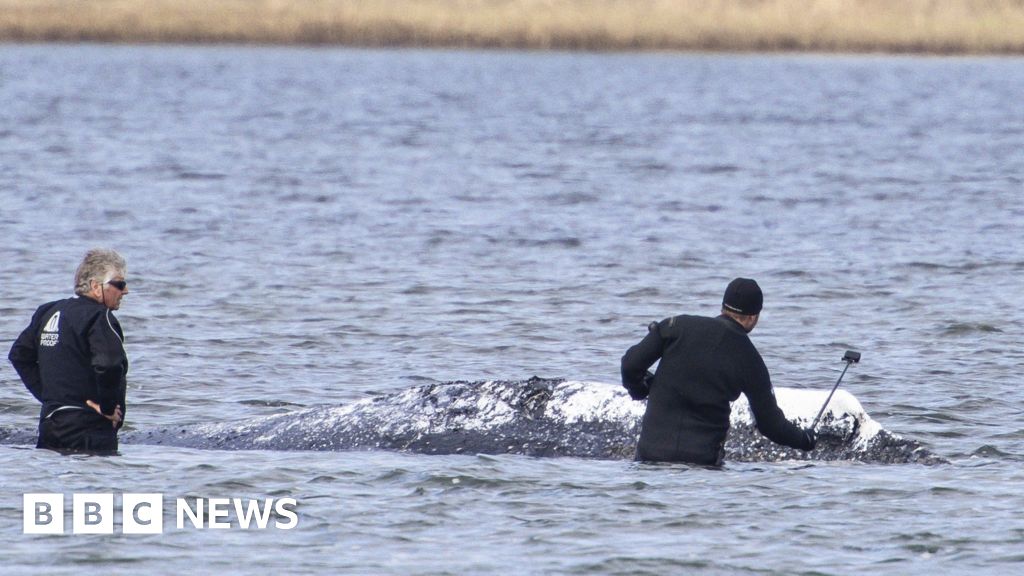
Initial rescue attempts, which had garnered international interest, had been fraught with difficulty. The whale had become stranded in the Baltic Sea region, and various salvage operations were mounted over several months. Ultimately, the animal was deemed too compromised by its prolonged struggle and the harsh environmental changes associated with the Baltic Sea’s lower salinity levels to be successfully relocated.
What This Means: A Focus on Decomposing Carcasses
The immediate priority following the retrieval is a thorough veterinary and research examination of the carcass. Officials indicated that the remains will be systematically dissected to allow experts to collect crucial biological samples. This process is essential for understanding the whale’s final health status and the environmental factors contributing to its demise. Furthermore, a significant concern noted by experts is the risk posed by decomposing marine life, which carries the potential for volatile gas buildup, necessitating careful handling to prevent any dangerous incidents.
Background and Context of the Stranding
The story traces back to the whale’s initial discovery near the German Baltic Sea coast. Despite the severity of its condition, multiple efforts were undertaken, involving specialized equipment to attempt repatriation. However, the biological challenges—including skin abrasions sustained from the brackish waters and general debilitation—made the rescue increasingly improbable. The whale eventually traveled or was moved to a location off the Danish coast, where it was towed onto the beach for specialized study. Authorities are now moving to process the carcass responsibly, which involves breaking it down into manageable pieces for transport and final disposition after necessary scientific data has been extracted.
About the Author