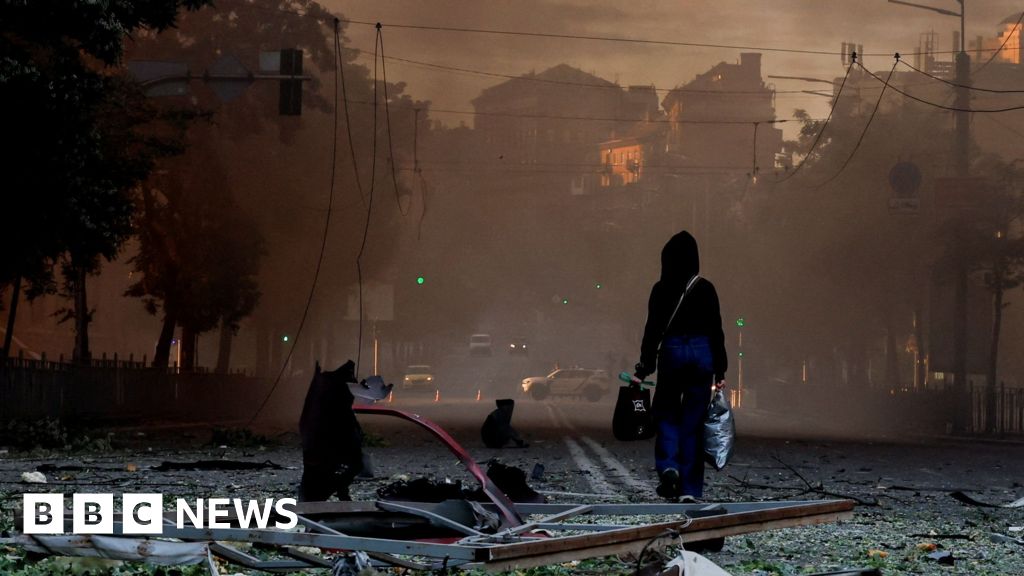
Kyiv Endures Significant Assault as Russia Launches Coordinated Strikes
The Ukrainian capital of Kyiv has been struck by a substantial barrage of missiles and drones, resulting in at least one fatality and injuring numerous civilians. Reports detailed widespread explosions across the metropolis, with damage assessments confirming impacts across nearly all districts, affecting everything from residential complexes to educational facilities. Emergency response efforts were immediately mobilized to combat numerous fires and clear debris from multiple damaged sites throughout the city.
These severe assaults follow heightened tensions, as the actions occurred in the backdrop of recent accusations exchanged between Kyiv and Moscow. The intensity of the attacks suggests a pattern of retaliatory action, escalating the already precarious situation on the front lines. Authorities have been operating under the warning that further, more extensive launches remain a possibility.
The Immediate Impact on Civilian Life
The direct consequences of the strikes were visible throughout the capital. At least one person lost their life after a residential tower in a central area sustained damage and subsequently caught fire. Additionally, structural damage was reported near schools, where debris blocked entrances, necessitating rescue efforts for those trapped inside. Local administrators reported that many individuals were transported to medical facilities, with several requiring urgent, intensive care.
The scale of the incident was characterized by the breadth of the damage, which spanned numerous locations across Kyiv. The response highlighted the critical coordination required among various emergency services to manage simultaneous crises—suppressing multiple fires, clearing large-scale debris fields, and providing immediate medical attention to the wounded.
Context and Escalating Tensions
The recent escalation appears linked to ongoing disputes regarding military incidents in eastern Ukrainian territory. Official statements indicated that Ukrainian forces were involved in an action near a contested area, which was then linked by Russian authorities to a previous deadly event involving civilians. This exchange fueled rhetoric from the highest levels of both governments, pointing toward a broader, volatile cycle of conflict escalation.
Leading up to the major strikes on Kyiv, high-ranking officials had issued warnings signaling potential large-scale military maneuvers targeting Ukrainian territory. These prior statements suggested that the aggressor nation was positioning itself to conduct comprehensive assaults across Ukrainian landmass, keeping the capital under constant threat of military action.
What This Means Moving Forward
The sustained and diverse nature of these attacks suggests that the conflict remains highly volatile and is not confined to established battlefronts. The targeting of civilian infrastructure—such as homes, schools, and commercial centers—indicates a disregard for non-military targets, increasing the humanitarian risk across the nation. International monitoring and diplomatic pressure remain crucial in any attempt to de-escalate the violence and protect civilian populations trapped between the opposing military powers.
}### Kyiv Endures Significant Assault as Russia Launches Coordinated Strikes## Kyiv Hit by Coordinated Strikes Amid Escalation of Conflict
The Ukrainian capital of Kyiv has been struck by a substantial barrage of missiles and drones, resulting in at least one fatality and injuring numerous civilians. Reports detailed widespread explosions across the metropolis, with damage assessments confirming impacts across nearly all districts, affecting everything from residential complexes to educational facilities. Emergency response efforts were immediately mobilized to combat numerous fires and clear debris from multiple damaged sites throughout the city.
These severe assaults follow heightened tensions, as the actions occurred in the backdrop of recent accusations exchanged between Kyiv and Moscow. The intensity of the attacks suggests a pattern of retaliatory action, escalating the already precarious situation on the front lines. Authorities have been operating under the warning that further, more extensive launches remain a possibility.
### The Immediate Impact on Civilian Life
The direct consequences of the strikes were visible throughout the capital. At least one person lost their life after a residential tower in a central area sustained damage and subsequently caught fire. Additionally, structural damage was reported near schools, where debris blocked entrances, necessitating rescue efforts for those trapped inside. Local administrators reported that many individuals were transported to medical facilities, with several requiring urgent, intensive care.
The scale of the incident was characterized by the breadth of the damage, which spanned numerous locations across Kyiv. The response highlighted the critical coordination required among various emergency services to manage simultaneous crises—suppressing multiple fires, clearing large-scale debris fields, and providing immediate medical attention to the wounded.
### Context and Escalating Tensions
The recent escalation appears linked to ongoing disputes regarding military incidents in eastern Ukrainian territory. Official statements indicated that Ukrainian forces were involved in an action near a contested area, which was then linked by Russian authorities to a previous deadly event involving civilians. This exchange fueled rhetoric from the highest levels of both governments, pointing toward a broader, volatile cycle of conflict escalation.
Leading up to the major strikes on Kyiv, high-ranking officials had issued warnings signaling potential large-scale military maneuvers targeting Ukrainian territory. These prior statements suggested that the aggressor nation was positioning itself to conduct comprehensive assaults across Ukrainian landmass, keeping the capital under constant threat of military action.
### What This Means Moving Forward
The sustained and diverse nature of these attacks suggests that the conflict remains highly volatile and is not confined to established battlefronts. The targeting of civilian infrastructure—such as homes, schools, and commercial centers—indicates a disregard for non-military targets, increasing the humanitarian risk across the nation. International monitoring and diplomatic pressure remain crucial in any attempt to de-escalate the violence and protect civilian populations trapped between the opposing military powers.
**JSON Output:**“`json
{
“title”: “Kyiv Hit by Coordinated Strikes Amid Escalation of Conflict”,
“content”: “
Kyiv Endures Significant Assault as Russia Launches Coordinated Strikes
The Ukrainian capital of Kyiv has been struck by a substantial barrage of missiles and drones, resulting in at least one fatality and injuring numerous civilians. Reports detailed widespread explosions across the metropolis, with damage assessments confirming impacts across nearly all districts, affecting everything from residential complexes to educational facilities. Emergency response efforts were immediately mobilized to combat numerous fires and clear debris from multiple damaged sites throughout the city.
These severe assaults follow heightened tensions, as the actions occurred in the backdrop of recent accusations exchanged between Kyiv and Moscow. The intensity of the attacks suggests a pattern of retaliatory action, escalating the already precarious situation on the front lines. Authorities have been operating under the warning that further, more extensive launches remain a possibility.
The Immediate Impact on Civilian Life
The direct consequences of the strikes were visible throughout the capital. At least one person lost their life after a residential tower in a central area sustained damage and subsequently caught fire. Additionally, structural damage was reported near schools, where debris blocked entrances, necessitating rescue efforts for those trapped inside. Local administrators reported that many individuals were transported to medical facilities, with several requiring urgent, intensive care.
The scale of the incident was characterized by the breadth of the damage, which spanned numerous locations across Kyiv. The response highlighted the critical coordination required among various emergency services to manage simultaneous crises—suppressing multiple fires, clearing large-scale debris fields, and providing immediate medical attention to the wounded.
Context and Escalating Tensions
The recent escalation appears linked to ongoing disputes regarding military incidents in eastern Ukrainian territory. Official statements indicated that Ukrainian forces were involved in an action near a contested area, which was then linked by Russian authorities to a previous deadly event involving civilians. This exchange fueled rhetoric from the highest levels of both governments, pointing toward a broader, volatile cycle of conflict escalation.
Leading up to the major strikes on Kyiv, high-ranking officials had issued warnings signaling potential large-scale military maneuvers targeting Ukrainian territory. These prior statements suggested that the aggressor nation was positioning itself to conduct comprehensive assaults across Ukrainian landmass, keeping the capital under constant threat of military action.
What This Means Moving Forward
The sustained and diverse nature of these attacks suggests that the conflict remains highly volatile and is not confined to established battlefronts. The targeting of civilian infrastructure—such as homes, schools, and commercial centers—indicates a disregard for non-military targets, increasing the humanitarian risk across the nation. International monitoring and diplomatic pressure remain crucial in any attempt to de-escalate the violence and protect civilian populations trapped between the opposing military powers.
About the Author