Stalled Progress: Review Reveals Major Funding and Development Gaps in River Basin Restoration
An extensive, independent assessment has concluded that state governments in New South Wales and Queensland have significantly fallen short of committed infrastructure goals designed to bolster water flows across the northern reaches of the Murray-Darling basin. The review points to a failure to implement over $160 million worth of promised developmental measures meant to revitalize river health and ecosystem functionality.
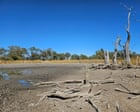
Eight years after these commitments were established, the findings highlight substantial deficits in the actual delivery of these crucial projects. A key area of concern involves the state of wetlands in New South Wales, which are currently experiencing severe desiccation. Furthermore, the investigation noted specific shortcomings, such as the inability of local authorities to secure necessary private land access rights required for improving water conveyance over floodplains in areas like the Gwydir region.
This failure to execute planned works has tangible ecological consequences, according to reports. Scientists recently faced difficult situations, requiring emergency intervention to rescue vulnerable wildlife, such as sea turtles, from wetlands that have dried up significantly, illustrating the immediate impact of the underdeveloped water management framework.
The Significance of Infrastructure Gaps
The findings underscore a critical disconnection between policy pledges and on-the-ground implementation regarding water resource management. When promised infrastructure improvements are delayed or incomplete, the natural environment cannot adapt to changing climatic patterns or sustain its existing biodiversity. The inability to manage flow rates or access key ecological areas translates directly into heightened environmental stress and reduced resilience for vital freshwater ecosystems.
This shortfall suggests that the mechanisms for coordinating large-scale environmental engineering—which often require cooperation across state lines and navigating complex private property issues—are inadequate or have broken down over time. The reliance on infrastructure to maintain river health means that systemic failures in planning and execution pose a considerable threat to regional water security.
Contextualizing Water Management Challenges
Water resource management in regions like the Murray-Darling basin is inherently complex, involving considerations of agriculture, urban consumption, environmental flows, and differing state sovereignties. Major investment programs are established to address cumulative pressures, such as drought cycles and increased demands. The commitment of tens of millions of dollars implies a foundational belief in the ability of engineering and regulatory frameworks to restore ecological balance. When these foundational pillars fail to materialize as planned, the entire basin faces compounding environmental vulnerabilities.
About the Author