Tensions Mount Over Border Dispute as Private Security Talks Commence
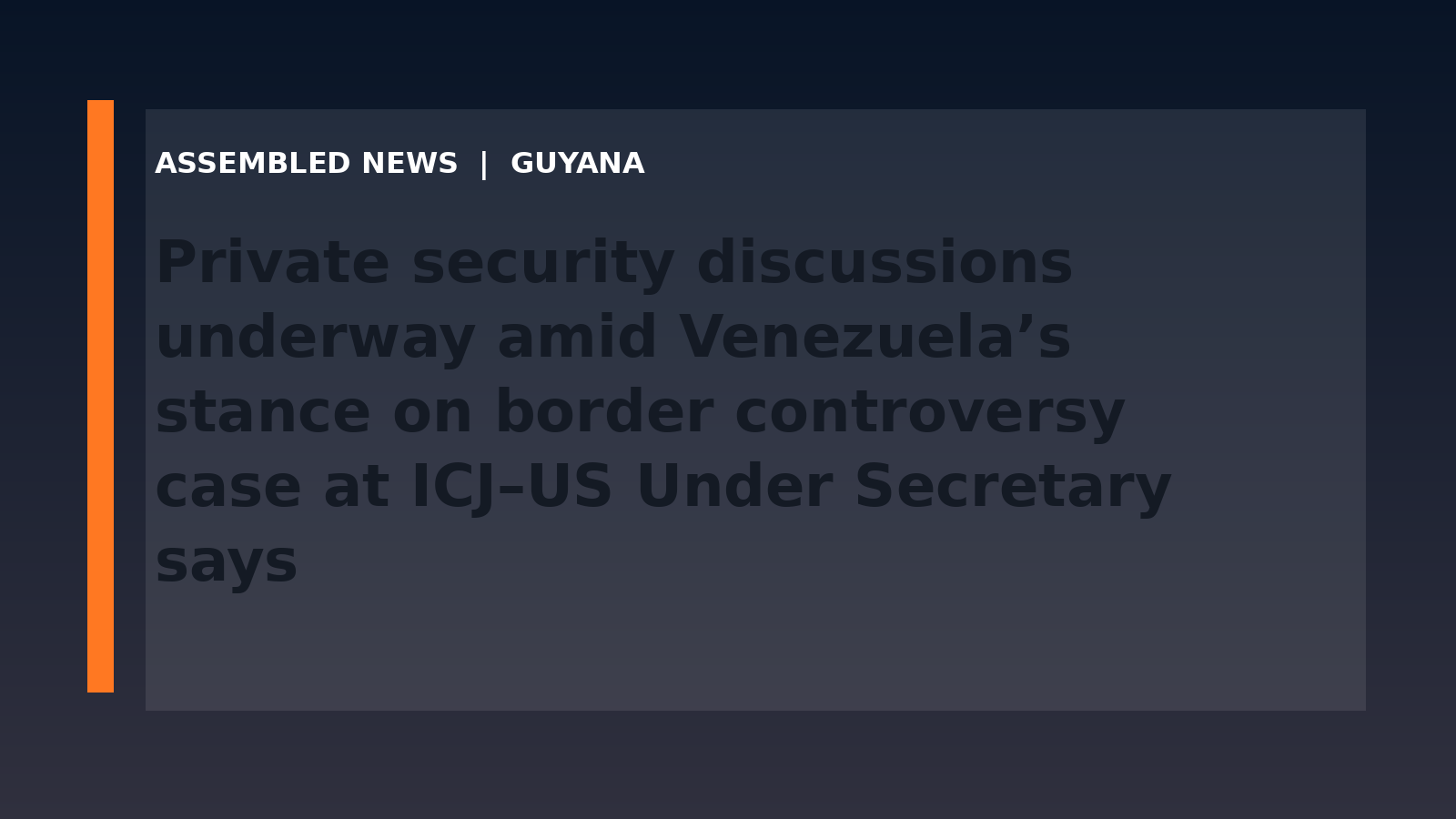
The ongoing legal dispute concerning the border demarcation between Venezuela and Guyana has drawn significant international attention, creating an atmosphere of diplomatic unease. Recent statements from high-ranking U.S. officials indicate that Washington is keenly observing the developments taking place at the International Court of Justice (ICJ). This heightened scrutiny is occurring against a backdrop of Venezuela’s stated position regarding the court’s jurisdiction over the conflict, adding layers of complexity to the diplomatic calculus in the region.
In response to the shifting legal dynamics—particularly Venezuela’s objections to the ICJ’s purview in the matter—U.S. officials have signaled a pivot toward non-public diplomatic channels. According to reporting, senior U.S. representatives have initiated discreet, back-channel dialogues focusing specifically on security implications. This suggests that while the legal battle continues in international forums, the practical, physical security dimensions of the disputed territory are now central to Washington’s immediate concern.
These private discussions underscore a pragmatic shift in focus. Rather than solely monitoring the judicial process, the emphasis is now placed on regional stability and managing potential escalations. The engagement in private security consultations suggests that major global powers are preparing for potential contingencies, necessitating conversations that move beyond public legal pronouncements.
What This Means for Regional Stability
The initiation of private security talks signals that the dispute has moved beyond a purely academic or legal disagreement; it has tangible geopolitical ramifications. When major external actors begin discussing security arrangements outside of official court proceedings, it implies a belief that the situation could rapidly transition from a diplomatic standoff to a more volatile security scenario. This raises the stakes for all involved parties, including Guyana, Venezuela, and neighboring nations, making continued vigilance crucial for maintaining peace.
Context and International Legal Framework
The underlying conflict involves historical claims over territory adjacent to the Essequibo region. The attempt to resolve this through the ICJ is an attempt to establish a definitive international legal ruling on the boundary lines. However, the involvement of international bodies is not always smooth, and objections to jurisdiction, as seen from the Venezuelan side, can stall proceedings or undermine the anticipated legal resolution. Such jurisdictional disputes force the international community to navigate a delicate balance between upholding legal precedent and managing immediate geopolitical tensions.
The overall message conveyed by the U.S. government appears to be one of deep engagement and readiness. By engaging in private security dialogues, the focus shifts from *who is legally correct* to *how to ensure stability regardless of the legal outcome*. This preparatory diplomatic maneuvering suggests that the U.S. views the potential for conflict—and the management of that potential—as its most immediate area of concern regarding the Caribbean border dispute.
About the Author