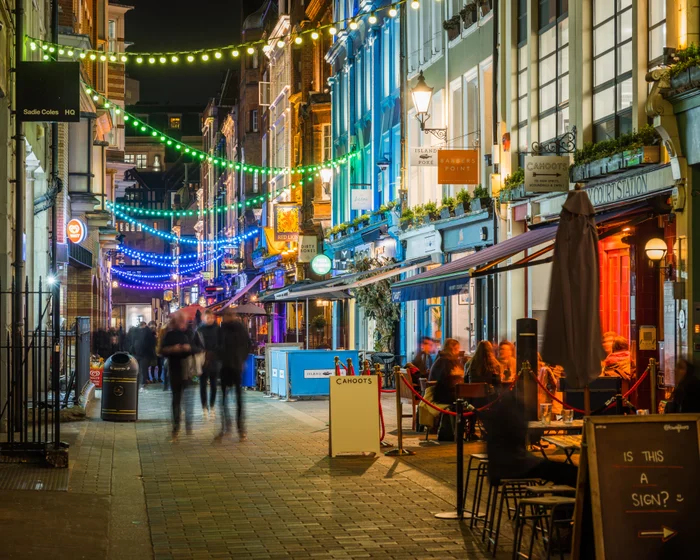
Tensions are escalating within London’s vibrant Soho district following a decision by a local residents’ association. This organization, backed by local council funding, has signaled its intention to mount significant opposition to nearly all prospective new and renewing licenses for bars and restaurants operating within the area. Area business owners have voiced concern that this assertive stance threatens the very character and international reputation that has drawn visitors to the neighborhood for decades.
The Soho Society, established over five decades ago with the stated goal of safeguarding the unique atmosphere of Soho, has formally adopted a restrictive new licensing directive following a recent general meeting. This mandate empowers the group to challenge incoming applications, not only for entirely new food and beverage establishments but also for extensions or changes to existing operating permissions. Furthermore, the group plans to object to any venue seeking to continue operations beyond the established curfew time set by Westminster council, which currently concludes at 11 PM.
What This Means for Local Businesses
The immediate implication of this group action is a significant hurdle for the hospitality sector. The ability to gain new operating permissions or to conduct minor changes to existing ones—such as extended hours or slight modifications to seating capacity—will now face a strong, organized challenge. For many established businesses relying on consistent nightlife revenue, this represents a considerable shift in the regulatory environment, potentially leading to reduced operational scope and altered revenue projections.
Understanding the Conflict Over Character
At the core of the dispute is a clash of interests regarding the definition and preservation of Soho’s cultural identity. While proponents of the residents’ group argue that strict control is necessary to maintain the area’s perceived character, operators suggest that this level of centralized control risks stifling the evolution that has historically defined the district. The debate touches upon balancing the need for community preservation against the necessity of maintaining a dynamic, economically vibrant, and commercially flexible entertainment hub.
Historical Context of Soho’s Governance
Soho has long been recognized globally as a nexus of culture, theatre, and gastronomy. Over the years, its growth has necessitated various forms of governance and planning intervention. The formation of neighborhood societies, often receiving some level of local government support, is not unusual in areas undergoing intense commercial development. These organizations typically aim to mediate the relationship between rapid commercialization and the maintenance of a specific residential or historic feel. However, when these groups take highly visible, exclusionary stances across an entire industry segment—such as the entire restaurant and bar sector—they move beyond mere neighborhood advocacy into a direct regulatory challenge that the local authorities must navigate.
About the Author




