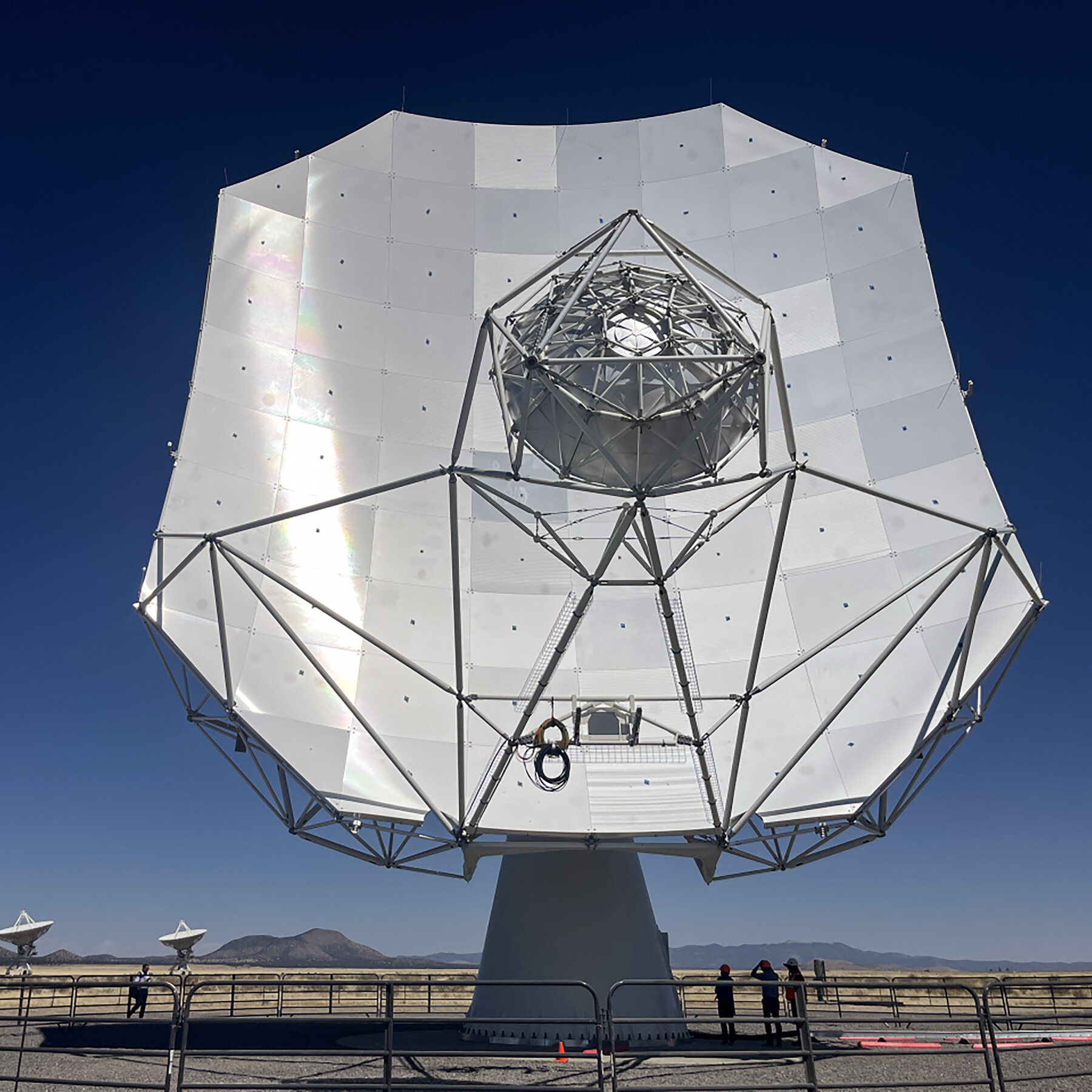
Pioneering Cosmic Discovery: How Expanded Radio Networks Are Redefining Astronomy
The landscape of astronomical research is undergoing a significant transformation, primarily driven by the deployment of massive, sophisticated radio telescope arrays. These new installations are poised to capture unprecedented insights into the universe’s most distant and energetic phenomena. By increasing the sheer scale and sensitivity of their observing capacity across vast geographical areas, these systems are marking the beginning of a new, highly detailed chapter in observational astrophysics.
The core of this revolution lies in the combination of advanced technology and expansive infrastructure. These modern facilities are designed not merely to observe, but to map the intricacies of cosmic signals across radio wavelengths. Such observations allow scientists to peer through the obscuring dust clouds that often block visible light, granting an unobstructed view of processes occurring in the early universe, the dynamics of supermassive black holes, and the structure of distant galaxies.
Significance for Scientific Understanding
The expansion of these radio monitoring networks carries profound implications for nearly every field of modern physics. By collecting data from numerous receiving stations spread across international borders, researchers can achieve phenomenal angular resolution and sensitivity that were previously unattainable. This enhanced capability allows for the detailed study of faint background signals, potentially uncovering relics from cosmic epochs that remain poorly understood by current models.
The cumulative power of such an array means that even the faintest whispers of radio emission from the deepest reaches of space can be captured and analyzed. This level of detail is critical for understanding the physics of intervening media—the gas and plasma that permeates interstellar and intergalactic space—and how those materials interact with powerful sources like quasars and active galactic nuclei.
Context and Technological Leap
The introduction of these large-scale radio observatories represents a major technological leap over previous generations of equipment. Where older arrays operated with more localized coverage, contemporary systems utilize a distributed approach. The strategic placement of dozens of receiving antennas across wide swathes of land enhances the instrument’s ability to track celestial objects across the sky with remarkable precision. This geographical spread is key to overcoming local interference and maximizing the total collecting area available for scientific study.
For the scientific community, this means a pivot towards deep-field surveys and complex source identification. Instead of focusing solely on individual, bright targets, the emphasis is shifting toward surveying immense volumes of space to detect patterns, faint signals, and the large-scale structures of matter. This holistic approach is redefining what is considered achievable in modern astrophysics, promising breakthroughs in areas ranging from the origin of cosmic microwave background radiation to the nature of dark matter itself.
About the Author




