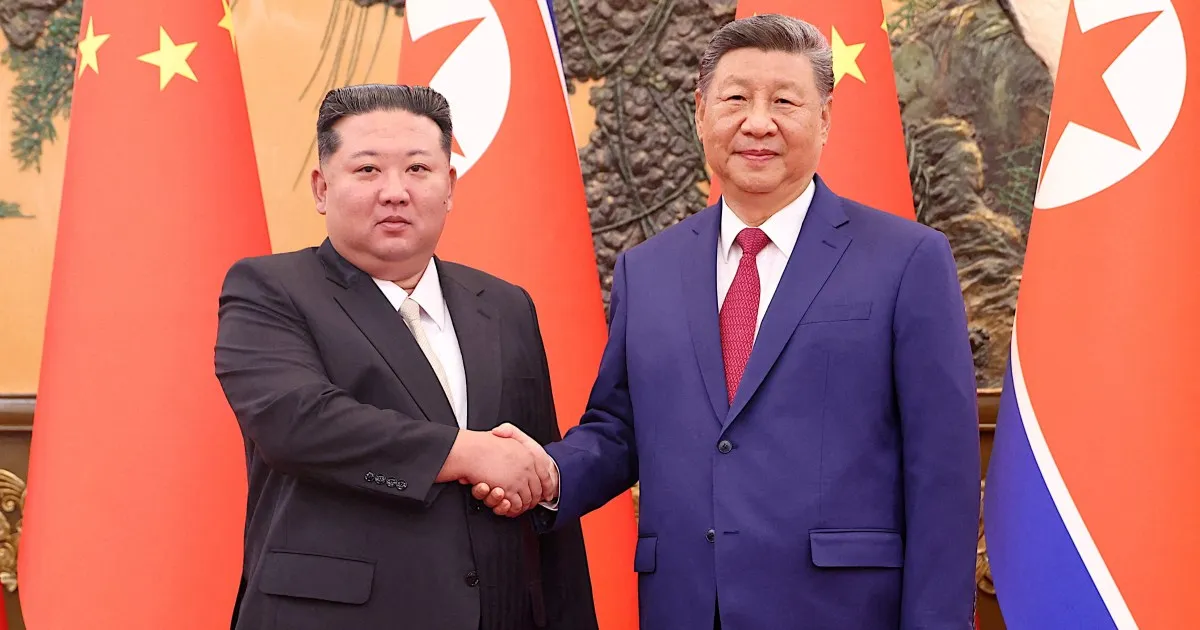
Assessing the Strategic Implications of High-Level China Engagement with North Korea
A high-profile visit by China’s top leader to North Korea signals a critical juncture in Northeast Asian geopolitics. Given Pyongyang’s status as an isolated regime, heavily scrutinized globally for its nuclear ambitions, any engagement from Beijing is viewed through the lens of Beijing’s strategic interests. China has long been the primary political and economic pillar supporting the North Korean state, making its diplomatic activities in Pyongyang particularly consequential for regional stability and power dynamics.
The timing of such an official visit cannot be separated from China’s broader diplomatic engagements. Reports of recent international meetings involving other global powers suggest a need to manage conflicting priorities regarding the Korean Peninsula. Specifically, the contrasting stances of nations—some advocating for the denuclearization of the region, while others maintain robust support for Pyongyang’s existing trajectory—create a complex diplomatic landscape. China’s involvement is thus interpreted by analysts as an effort to solidify its indispensable role as Pyongyang’s key patron.
What This Means: Balancing Global Pressure with Regional Loyalty
The central theme emerging from these high-level interactions is China’s delicate balancing act. On one side, the international community, including many global partners, exerts continuous pressure due to North Korea’s advanced nuclear program, leading to significant international sanctions. On the other side, Beijing’s relationship with Pyongyang is rooted in deep historical and geopolitical ties. The visit serves to reaffirm this foundational support, helping to buffer the regime from overwhelming external diplomatic and economic isolation.
For the region, the visit’s significance lies in reinforcing the established Sino-DPRK axis. Analysts suggest that China aims to leverage its continued patronage to secure its own regional strategic depth and stability. This suggests that any outcome concerning the Korean Peninsula will be heavily mediated through Beijing’s desire to maintain a predictable, if tense, equilibrium among its neighbors.
Background and Context: The Pillars of Support
China’s enduring commitment to North Korea is historically significant. Beijing functions as the state’s most reliable economic lifeline and primary diplomatic shield against the cumulative weight of global international disapproval. The DPRK leadership has made multiple pronouncements emphasizing that its pursuit of nuclear capabilities is a non-negotiable policy direction, viewing this capability as integral to its national security identity. This unwavering stance dictates that any engagement from Beijing must navigate the reality of a determinedly armed Pyongyang.
The dynamics are further complicated by the alignments of other global players. The varying positions of major world powers—from those who push for an outright end to nuclear weapons to those actively cultivating deeper bilateral ties with the regime—mean that China’s official interactions must account for these divergent international pressures. Therefore, the visit is less about engineering a rapid policy shift and more about managing the existing, complex structure of patronage and mutual security guarantees that have long characterized the relationship between Beijing and Pyongyang.
About the Author