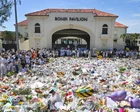
Security Protocols Under Scrutiny: Insights from Bondi Commission Report
A significant inquiry into antisemitism and social cohesion has released an interim report detailing findings related to security planning for Jewish community gatherings. The review specifically highlighted concerns surrounding the preparedness levels for a large-scale festival held at Bondi Beach during Hanukkah. According to the report’s findings, officials who manage public safety protocols were reportedly unprepared, despite receiving explicit warnings regarding a heightened threat level for the scheduled event.
The core focus of the interim report appears to center on improving the coordination and depth of security assessments conducted before major cultural celebrations. While the investigation did not uncover any deficiencies in the existing body of law that could have prevented the tragic violence, it strongly emphasized the critical need for more cohesive and proactive policing strategies when managing events with significant community focus.
The Need for Enhanced Operational Coordination
The findings point toward a need for systemic improvements in how security agencies interact when managing public gatherings. The commission’s recommendations call for tangible upgrades in inter-agency communication and risk evaluation. The implication is that while the legal framework may be robust, the practical, on-the-ground execution of threat management requires a higher degree of synchronization among law enforcement bodies to effectively mitigate potential risks at high-profile community events.
Impact on Future Cultural Gatherings
The implications of this review extend beyond a single incident; they suggest a necessary overhaul of best practices for managing communal celebrations across Sydney and beyond. For the Jewish community and its organizers, the report signals that while their concerns about security threats were duly registered, the police response structure must evolve to treat high-alert notices not merely as advisories, but as triggers for exhaustive, pre-emptive security modeling. This necessitates a shift toward a more integrated, rather than segmented, approach to public safety planning.
Context of the Review
This inquiry was established in the immediate aftermath of a severe attack that resulted in multiple fatalities. The subsequent review aimed to dissect the entire chain of responses, looking backward to identify procedural failures or coordination gaps that contributed to the vulnerability of the community. The resulting recommendations serve as a blueprint for bolstering preventative measures, focusing heavily on the preparatory stages—the assessments, the communication flows, and the deployment of protective resources.
About the Author