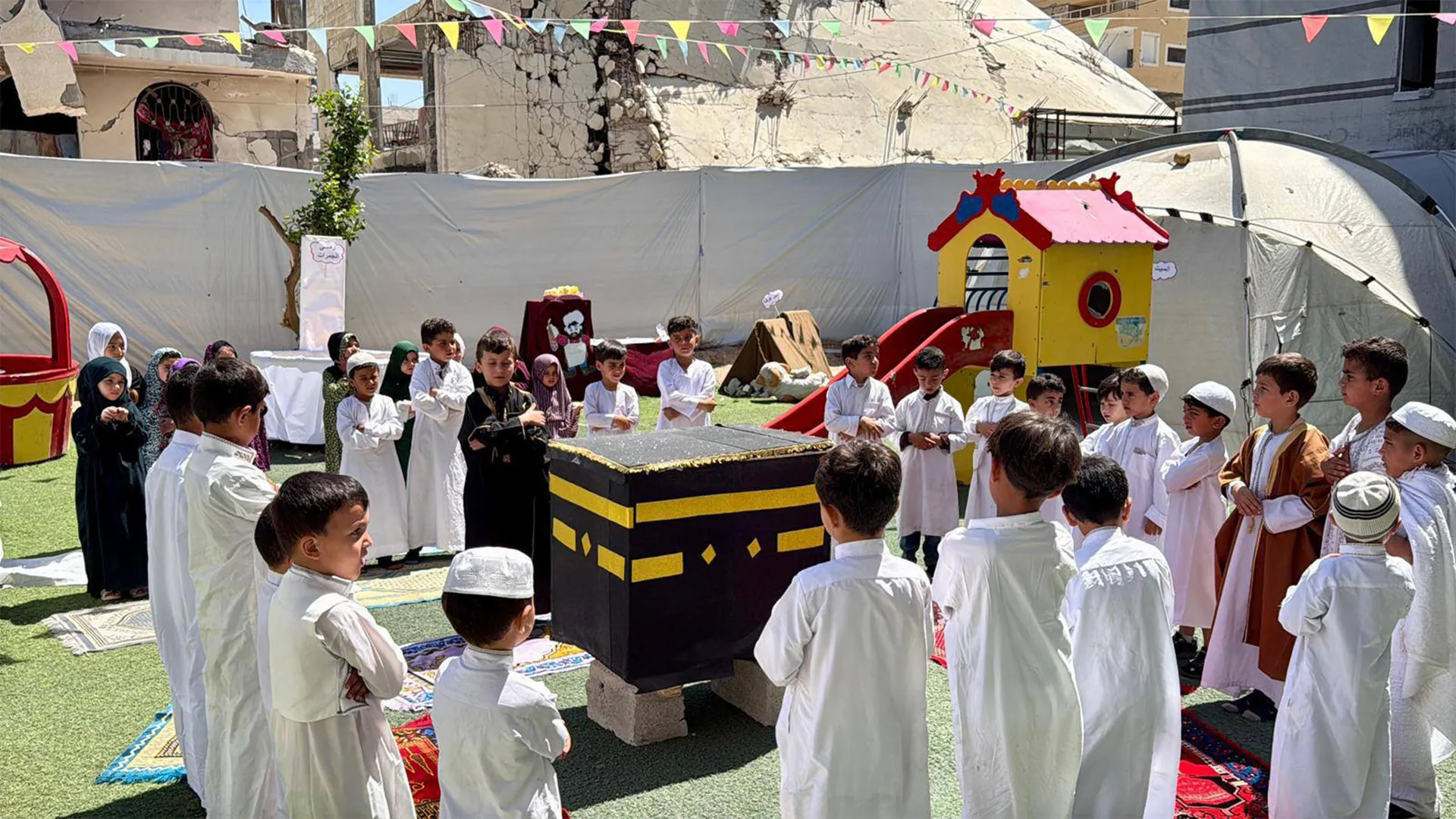
Imaginative Commemoration: Gaza Children Adapt Rituals as Major Pilgrimage Remains Out of Reach
Amid ongoing restrictions and blockades, the cultural and spiritual life within Gaza has seen creative adaptations. In response to the inability of many residents to participate in major religious journeys, educational institutions are stepping in to maintain cultural continuity. Local schools have reportedly implemented comprehensive educational programs focused on teaching the intricate rituals associated with the Hajj, the monumental pilgrimage to Mecca.
These efforts represent a remarkable local response to external limitations. Rather than the physical performance of the journey, the focus has shifted to immersive, educational enactment. By structuring classes to mimic the rites of passage associated with the Hajj, educators are ensuring that the spiritual knowledge and cultural practices remain alive within the community, passing tradition from one generation to the next even when access to the physical site is restricted.
The Significance of Community Continuity
The necessity of these school-led programs highlights a significant challenge faced by the population: the interruption of deeply ingrained religious and cultural cycles. When established routes to participation are blocked, the preservation of cultural identity becomes an active, intentional effort managed at the local level. This educational focus serves not only as a religious rite but as a crucial mechanism for maintaining social cohesion and a sense of normalcy amid prolonged hardship.
Impact on Cultural Education and Resilience
The initiative demonstrates a profound resilience within the local educational framework. By integrating complex ritual knowledge into the classroom setting, the curriculum effectively turns a period of forced absence into an opportunity for deep learning and communal reflection. This pedagogical approach ensures that the next generation understands the full scope and spiritual weight of the pilgrimage, preparing them for when travel restrictions might ease.
Context of Restricted Movement
The current circumstances are underscored by sustained difficulties in movement for the population. Official statements indicate that travel limitations have prevented residents from undertaking the Hajj pilgrimage over several consecutive years. The blockade has thus necessitated an alternative, yet equally important, method of spiritual and cultural transmission, keeping the traditions alive through dedicated scholarly and practical instruction within the enclave’s academic settings.
What This Means
These educational adaptations carry a powerful message regarding the tenacity of cultural practices when faced with geopolitical constraints. They illustrate that human connection to faith and heritage is deeply ingrained, leading communities to innovate educational solutions rather than simply pausing tradition. The commitment shown by the educational sector underscores the community’s prioritization of cultural preservation, treating knowledge itself as a vital form of sustenance and resistance.
Background
The Hajj is one of Islam’s most significant pilgrimages, a journey that draws millions of Muslims annually to Mecca. For many, participating in the pilgrimage is a defining life spiritual milestone. The ability to perform such major religious duties is often tied to physical access and safety. When that access is severely curtailed by external political measures, the educational simulation becomes a vital substitute, ensuring that the cultural memory and detailed knowledge surrounding the rite do not fade away.
About the Author




