Civilian Life in Siege: Survival Under Threat in Cut-Off Ukrainian Town
For the residents of certain frontline Ukrainian cities, daily existence has devolved into a desperate struggle for basic necessities. Communication from these areas paints a stark picture of communities severely isolated, where the primary concerns are securing food, medicine, and safety. Residents report that entire towns are geographically and militarily cornered, leaving them cut off from predictable supply lines and struggling to sustain life under the persistent shadow of conflict.
The notion of escape is fraught with extreme peril. Local accounts suggest that traversing the surrounding areas, particularly main access routes, is incredibly dangerous due to extensive mining activity. This combination of isolation, damaged infrastructure, and active military positioning has effectively trapped the population within a confined, besieged zone. Official humanitarian monitoring has repeatedly flagged the deepening nature of the crisis, underscoring the critical need for sustained external support.
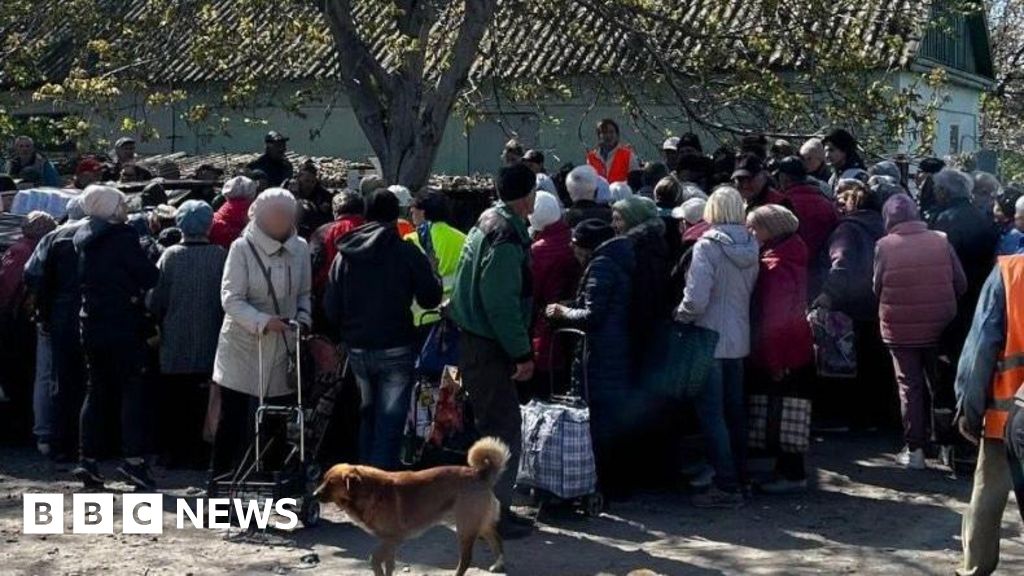
Despite the overwhelming difficulty, resilience is evident. Survivors have been observed organizing communal efforts to procure vital supplies, with community members—including many elderly residents—pooling resources and venturing out to scavenge necessary goods. While life continues with such resourcefulness, the constant reliance on makeshift efforts underscores the systemic breakdown of normal civil infrastructure and support systems.
What This Means: Sustained Humanitarian Vulnerability
The predicament faced by these populations highlights a profound and immediate humanitarian vulnerability. When a civilian center is simultaneously isolated by both environmental damage and military conflict, its inhabitants become critically dependent on non-military aid channels. The ongoing struggle is not merely one of deprivation, but of sustained physical safety against active conflict zones. The inability to reliably move goods in or people out creates a volatile situation where internal community structures become the primary safety net.
Background and Context: Geographic Bottlenecks
These communities are situated in strategic locations that have become severe geographic bottlenecks. Their positioning near major waterways, such as the Dnipro River, means that access and movement are severely dictated by the state of the river crossings and the surrounding river banks. Historically significant areas that have seen fighting intensify have resulted in infrastructure—bridges, roads—being destroyed or rendered unsafe. This confluence of factors means that the populace is trapped between major military lines, with the daily reality governed by the ebb and flow of frontline combat and the danger posed by unexploded ordnance.
About the Author