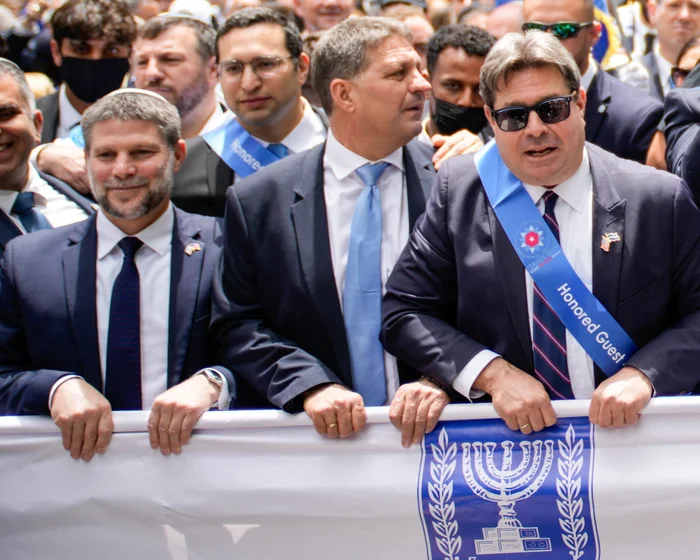
The annual celebration of Israel Day in New York City served as a backdrop for noticeable political tensions, particularly regarding the attendance of certain Israeli political figures. Several high-profile Democratic politicians who took part in the city’s commemoration expressed public disapproval toward the inclusion of far-right Israeli minister Bezalel Smotrich. This public condemnation highlights a discernible internal disagreement among certain segments of the American political spectrum regarding the political spectrum represented at such widely attended cultural events.
Smotrich, a prominent figure associated with the Israeli settler movement and holding a significant role in Israeli finance, was among the officials participating in the procession. His presence drew pointed critiques, signaling a divergence in views about the political currents represented in support of Israel. The notable nature of his visit was further underscored by the fact that it represented his first trip to the United States in over a year, occurring shortly after he made statements regarding international legal proceedings.
What This Means: Political Friction and Public Discourse
The incident underscores a growing complexity in how American politicians view and engage with international political matters, specifically concerning Israel. The bipartisan nature of many community celebrations can occasionally become a stage for underlying domestic ideological disagreements. When leading American Democrats publicly criticize a key Israeli participant—especially one associated with far-right policies—it signals that the political messaging surrounding these observances is not monolithic. Instead, it reflects a more nuanced, and at times strained, internal dialogue about political alignment and international policy choices.
Background and Context: Navigating International Politics
The political environment surrounding Israel has been marked by intensifying international scrutiny and internal policy debates, which naturally filter into public visibility. Official statements have pointed to increased scrutiny regarding Israeli government policies. The involvement of figures like Smotrich, who have drawn attention through statements concerning international judicial bodies, adds a layer of geopolitical tension to the already celebratory nature of the parade. For the participating American politicians, the decision to publicly critique a specific Israeli minister’s attendance suggests they are attempting to publicly balance support for the nation with a critique of particular political agendas operating within it.
Ultimately, the event serves as a microcosm of larger discussions about political solidarity versus ideological alignment. While the parade itself is intended as a celebration, the visible dissent among certain American politicians transforms it into a pointed commentary on the internal political debates spanning both sides of the Atlantic.
About the Author




