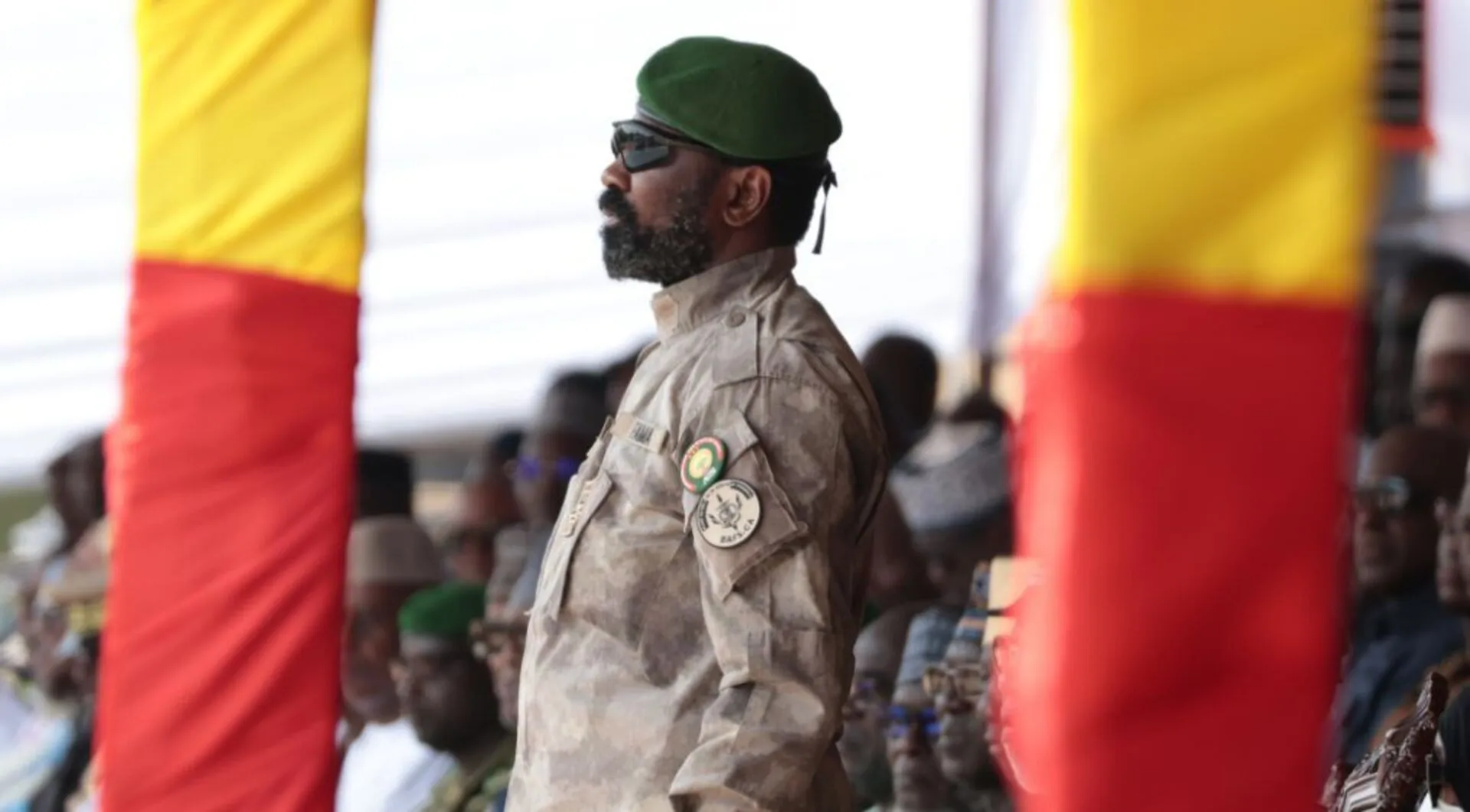
Mali Faces Deepening Instability Amid Coordinated Challenges to Governing Authority
The political landscape of Mali is undergoing a period of profound instability, as various armed factions have coalesced to openly contest the authority of the current military administration. This latest wave of unrest presents a considerably more complex and potent challenge than previous uprisings the nation has endured. Groups associated with militant organizations, notably those with ties to al-Qaeda, have recently linked up with Tuareg rebel elements. Together, these combined forces have successfully captured control over several key towns, suggesting a significant erosion of the state’s grip on territory.
Since gaining independence from France in 1960, the governance structures in Mali have repeatedly faced challenges, particularly in the northern regions. While there have been numerous armed confrontations over the decades, the current upheaval is drawing attention due to the depth of the coordination among the opposition. The military junta, which assumed power following a coup in 2020, has publicly attributed the recent aggression to backing from France, its former colonial administrator.
What This Means for the Nation’s Stability
The ability of the ruling military council to reassert control across the entire nation is now under intense scrutiny. The success in capturing multiple strategic locations indicates that the conflict has evolved beyond localized skirmishes into a challenge to the very pillars of state authority. The perceived external involvement, with the junta having previously enlisted foreign military assistance—including Russian forces—to combat militant groups operating throughout the Sahel region, heightens the geopolitical stakes. The need for the current regime to secure broader regional endorsements or significant material support to maintain its foothold in power is becoming a critical flashpoint.
Regional and Historical Context
The conflict unfolds against a backdrop of historical sensitivity and ongoing geopolitical maneuvering in West Africa. Mali’s post-colonial history is marked by persistent tensions in its peripheral regions. The convergence of local ethnic grievances, the enduring presence of transnational militant networks, and the recent shift in international security partnerships has created a volatile environment. Officials are now keenly watching whether the junta can leverage regional blocs or international partnerships to stabilize the situation and withstand the coordinated military pressure from the rebel coalition.
Geopolitical Tensions and Future Outlook
The situation compels international observers to analyze the resilience of the current governance model. The junta’s accusations concerning foreign meddling underscore the deep fissures within Mali’s security partnerships. If the military government cannot rapidly restore a visible level of security and demonstrate decisive control over the major population centers, the prospect of further political fragmentation and humanitarian concern increases significantly. The immediate future hinges on the military’s capacity to counter the unified momentum of the rebel factions.
About the Author




