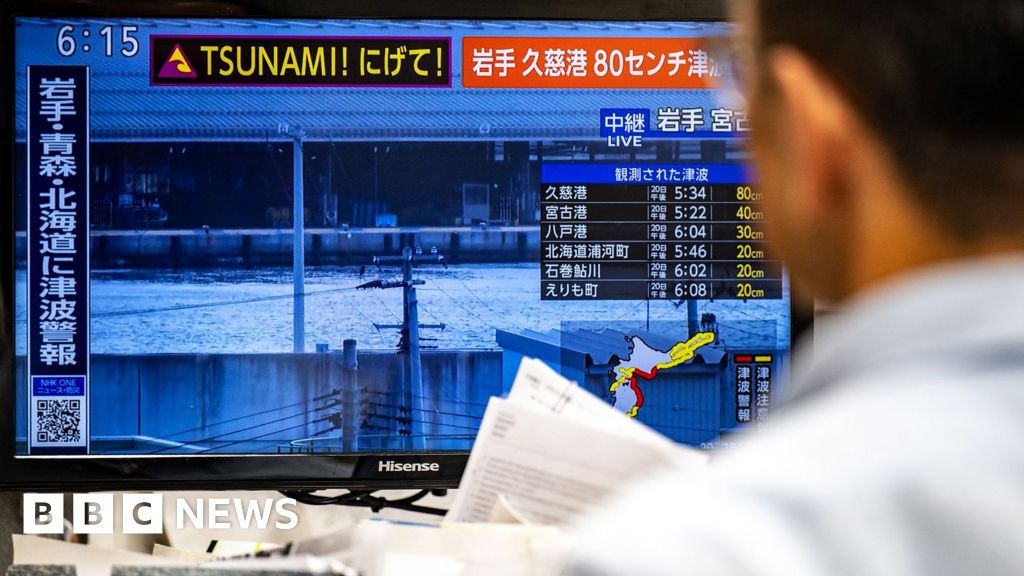
Following a significant 7.7 magnitude earthquake that struck the northeast coast, officials in Japan have escalated warnings regarding the potential for further substantial seismic activity. The tremors, originating offshore from the Iwate prefecture, prompted immediate emergency responses, including widespread evacuation orders for coastal populations. While initial reports indicated measurable tsunami waves, authorities have maintained heightened caution, suggesting that more potent geological events could manifest over the subsequent week.
The scale of the current advisories signals a notable increase in perceived risk compared to baseline levels. Experts have raised the probability of future quakes reaching magnitudes of 8.0 or higher. This heightened vigilance is underscored by the region’s historical vulnerability, recalling the catastrophic impact of the 2011 disaster. As a result, advisories for tsunami risks are active across major regions, including the main island of Honshu and the northern reaches of Hokkaido.
Emergency procedures are currently in force, necessitating immediate relocation for residents near shorelines and riverbanks to designated high ground. The guidance remains clear: individuals must remain in safe locations until the official warning has been officially rescinded. Local governments are actively managing the situation, utilizing public address systems to ensure residents remain aware of potential immediate hazards and necessary precautions.
What This Means: Heightened Preparedness for Uncertain Future
The consistent escalation of warnings signifies that seismic experts do not view the recent event as an isolated incident. Instead, the situation is being treated as part of a potentially unstable aftershock sequence. The primary impact on the public is the mandatory implementation of evacuation protocols. Citizens are being directed to move inland and to higher elevations, even when the initial physical shaking felt less severe than anticipated. This coordinated response underscores the critical need for public adherence to established safety guidelines.
Background / Context: Managing Extreme Geological Risk
Japan’s geography places it in a zone of intense tectonic plate interaction, making it naturally susceptible to powerful earthquakes and subsequent tsunamis. The public memory of past major seismic events significantly informs the current cautious reaction. Official advisories operate on a tiered system, with the most severe warning level demanding immediate flight from vulnerable coastal and riverside zones. The ongoing monitoring and continuous issuance of warnings reflect a commitment to public safety, prioritizing preventative evacuation measures in the face of unpredictable underwater geological forces.
About the Author