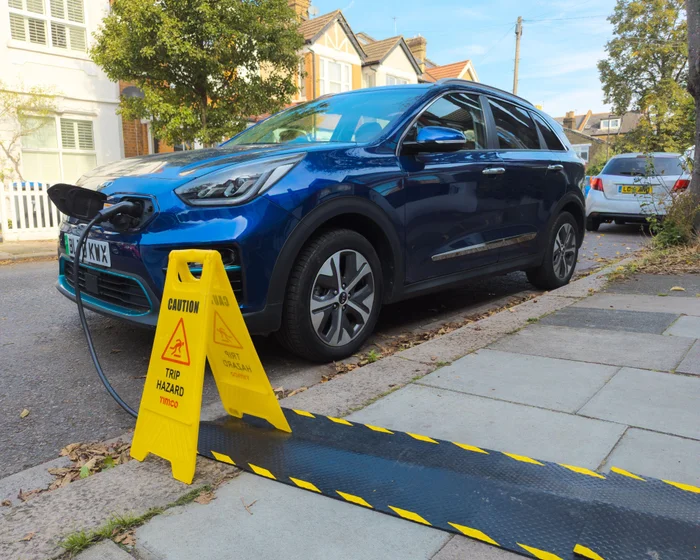
Navigating Local Rules: Why Widespread On-Street EV Charging Faces Significant UK Hurdles
The rollout of convenient, on-street electric vehicle (EV) charging points has been heralded as a crucial step toward decarbonizing transport across the United Kingdom. Proponents advocate for installing charging infrastructure directly into street gullies, positioning it as a streamlined solution to boost accessibility and reduce the cost burden on EV owners. However, this national vision is confronting a patchwork of localized opposition, suggesting that simple technological upgrades could be hampered by outdated local governance practices.
Despite governmental assurances aimed at simplifying bureaucratic processes and removing logistical barriers, numerous local councils are reportedly resisting the installation of these essential charging conduits. Instead of a uniform national approach, potential EV adopters face what some describe as a ‘postcode lottery.’ This resistance stems from a complex mix of cited concerns, including perceived safety risks, intricate legal ambiguities, and existing parking regulations, creating a significant gap between central policy goals and practical local implementation.
The ability to install charging cables underground or across pavements, which is central to making this infrastructure feasible for millions of homes, remains contentious. While governmental bodies have publicly committed to easing regulatory friction, the real-world resistance at the municipal level suggests that significant hurdles—beyond mere paperwork—need to be addressed before a truly ubiquitous charging network can materialize for UK drivers.
The Implications for EV Adoption Rates
The localized denial of basic charging access significantly complicates the narrative of electric vehicle adoption. For many potential buyers, the primary deterrent is ‘range anxiety’ or ‘charging anxiety’—the worry about where and how to replenish power when away from home. If the most convenient public charging options are blocked by local council objections, the practical utility of owning an EV is diminished. This forces drivers to rely on fewer, often less convenient, charging hubs, potentially slowing the transition away from internal combustion engine vehicles across the nation.
This situation highlights a critical disconnect between national environmental objectives and local operational autonomy. The promise of reduced costs and increased convenience hinges on the assumption of relatively smooth regulatory passage. When more than twenty local authorities effectively veto the installation methods—such as embedding charging points in street drainage—it suggests that the policy support remains theoretical rather than fully operational on the ground.
Contextualizing the Infrastructure Challenge
The push for on-street charging is fundamentally about maximizing public utility while minimizing private property impact. Historically, infrastructure projects require painstaking coordination across utility providers, road engineers, and local planning departments. The resistance encountered by proponents of gully-based charging indicates that the perceived risk—whether safety or logistical—is being weighted more heavily by local administrators than the pressing need for accessible, modern energy infrastructure. Until a standardized, streamlined process that addresses these specific local concerns is legally adopted and enforced across all jurisdictions, the deployment of much-needed EV charging points will remain uneven and unpredictable for the average road user.
About the Author