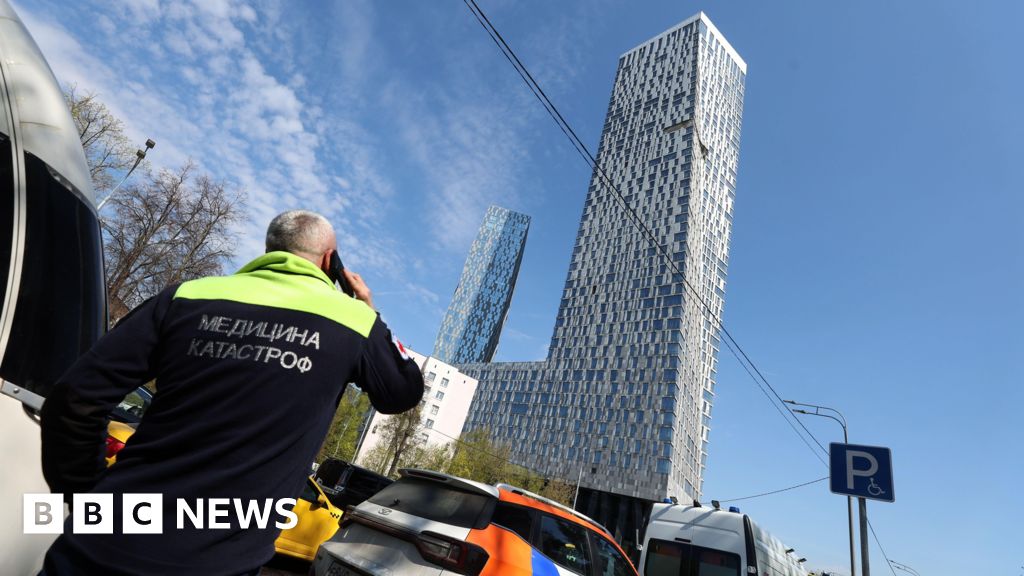
The Russian capital experienced significant aerial activity in the early hours of a recent Monday, with an unmanned aerial vehicle striking a high-end residential structure. While the incident caused visible damage to the building’s exterior, official reports indicated no reports of injuries. This marked the third consecutive night of drone incursions into Moscow, intensifying tensions just days before commemorations marking the Soviet victory in World War II.
The incident occurred in an affluent district of southwest Moscow, surprisingly close to key historical sites like Red Square. The heightened security posture surrounding the city is evident, as major international airports suspended operations overnight. Authorities noted that a substantial number of drone threats were intercepted across various regions of Russia over the preceding days, pointing to a coordinated escalation in aerial activity targeting major population centers.
In response to the persistent threat, the government made notable adjustments to planned celebrations. Plans for the annual large-scale military parade, traditionally a centerpiece of the Victory Day observance, were scaled back. Furthermore, the administration announced a temporary cessation of hostilities between the two nations for the immediate holiday period, while simultaneously issuing stern warnings of major countermeasures should Ukrainian activity threaten the celebrations.
What This Means: A Climate of Heightened Alert
The frequency and proximity of these drone strikes signal a marked deterioration in the immediate security environment for Russia’s major metropolitan areas. The attacks, coupled with the operational disruptions at key transport hubs and the implementation of restricted services for residents, suggest a strategic attempt to exert pressure on the Russian state apparatus right before a globally significant national observance. The focus on preventing disruption near ceremonial grounds points to a perceived threat to the legitimacy of the planned festivities.
Background and Context: Security Measures and Diplomatic Maneuvering
Throughout the preceding period, reports indicated multiple drone alerts across the region, leading to widespread cancellations of civil aviation services. While the Kremlin maintains advanced air defense capabilities, the regular disruptions underscore the unpredictable and persistent nature of the aerial assaults. Simultaneously, there has been a noticeable tightening of domestic controls; local media outlets reported on the potential restriction of mobile internet services across Moscow for security reasons for a sustained period. These combined measures—military posturing, infrastructure disruption, and localized surveillance tightening—paint a picture of a capital operating under considerable stress while attempting to proceed with major national pageantry.
About the Author