Political Crossroads: Palestinians Head to Polls Amid Factional Splits and Governance Challenges
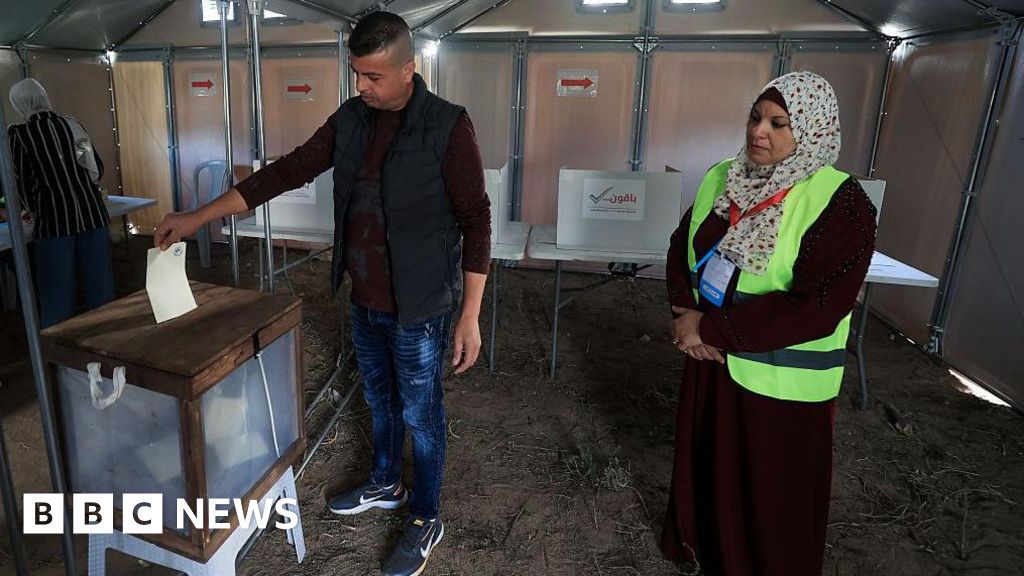
Across the Palestinian territories, elections are underway, marking a significant moment for local governance while highlighting deep divisions between major political factions. Voters in the West Bank and specific areas of Gaza are participating in polls designed to elect local representatives. These elections are notable for encompassing the first local vote in Deir al-Balah, a central Gaza community, since 2006. The process involves over a million eligible voters across the various regions.
The political landscape influencing the voting patterns is complex. While the Palestinian Authority (PA), which controls parts of the West Bank, governs some areas, the political environment is strained. Notably, the major armed group operating in Gaza, Hamas, was barred from official participation on the ballot in the central Gaza site where the voting is concentrated. This political exclusion has created a scenario where alternative groups and factions have adopted varied strategies for participation, leading to varied levels of opposition and non-involvement in the electoral process.
Understanding the Current Political Climate
The significance of these local polls extends beyond mere administrative representation; they reflect the underlying discontent with established political leadership. Many residents view the PA, led by the Fatah faction, with considerable skepticism. Critiques often focus on perceived corruption and an inability to alleviate economic hardships or resolve the persistent issue of the occupation. This widespread disillusionment creates a unique dynamic, particularly evident in the West Bank, where dissatisfaction with the incumbent authority appears strong.
Conversely, the political momentum and public sentiment are shifting in different ways across the territories. In Gaza, despite the recent conflict, the political fallout has spurred intense local focus. Meanwhile, in the West Bank, while the Fatah party remains the most visible participant among the major factions, the field has narrowed considerably due to various objections lodged against the electoral legislation itself, suggesting deep-seated disagreements even among those seeking to participate.
Implications for Palestinian Unity and Governance
The current election cycle serves as a poignant reminder of the fragmentation within the broader Palestinian political structure. The divergence between the established PA factions and Hamas, which gained power in Gaza following a previous electoral contest, underscores the difficulty in forging a unified political front. The election mechanics, particularly the constraints placed on candidates and the geographic limitations—restricting voting to specific, less-damaged zones in Gaza—suggest that the overarching goal of achieving consensus remains distant. These local outcomes will provide immediate insights into regional governance needs but underscore the ongoing national challenge of political cohesion.
About the Author