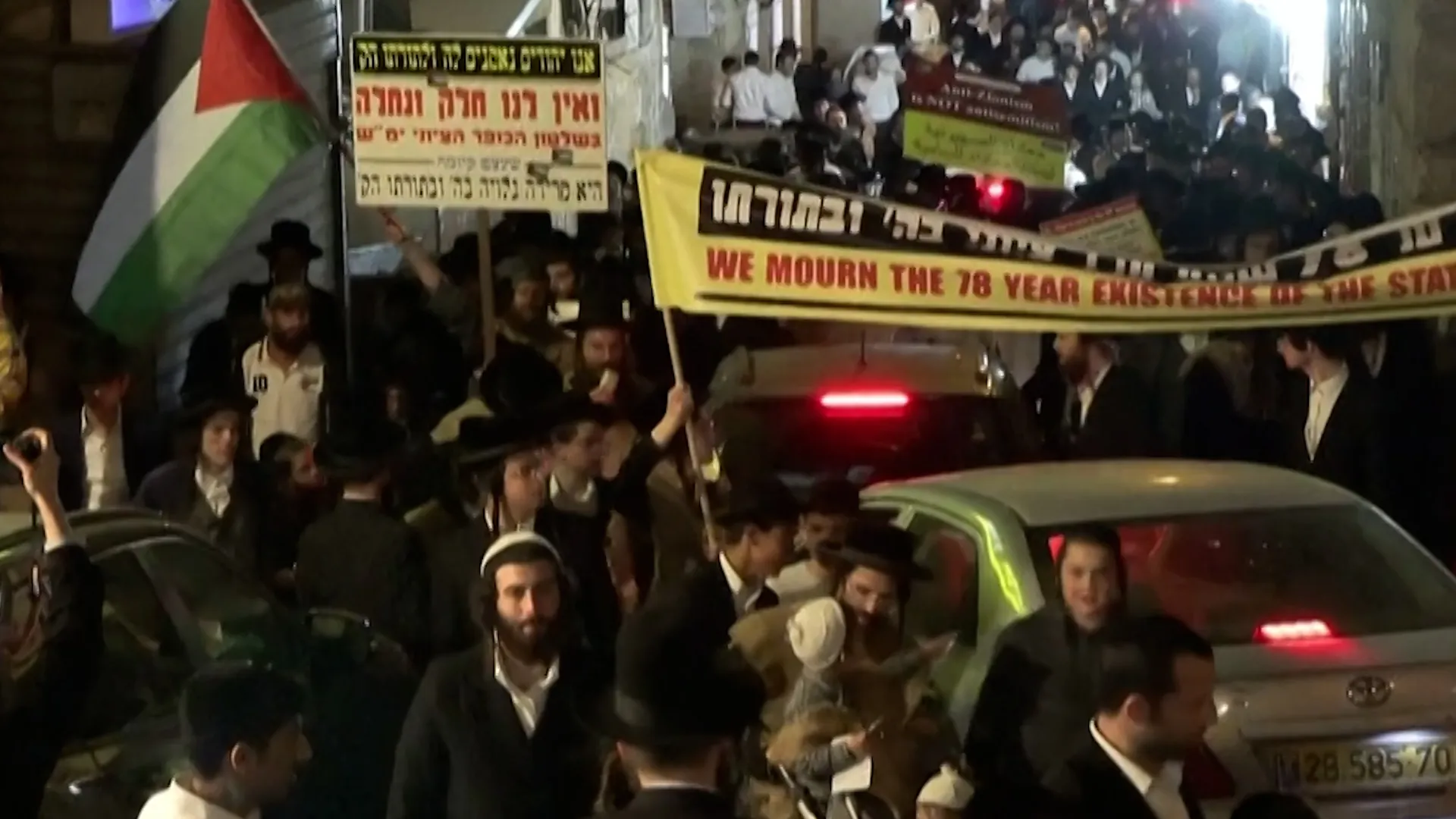
Religious Community Protests National Observance with Symbolic Displays in Jerusalem
As Israel commemorated the 78th anniversary of its founding, a notable form of dissent emerged from certain segments of the religious community in West Jerusalem. Members of the Ultra-Orthodox Jewish population gathered in the Mea Shearim neighborhood, staging protests that utilized highly visible, symbolic actions. The primary element of this demonstration involved the burning of Israeli flags and the display of signage critical of the prevailing national sentiment.
These actions represented a clear divergence from the celebratory mood surrounding the anniversary. Rather than participating in official national commemorations, the protesters organized displays that conveyed a strong political message. The nature of the protest suggested a deep ideological disagreement with the national narrative, particularly concerning the broader concept of Zionism, which they openly challenged through their visible demonstrations.
What This Means: Ideological Rift in Public Space
The incidents highlight a significant and persistent ideological cleavage within Israeli society. The spontaneous, public nature of these protests shows that certain religious factions feel that the national observance overlooks or actively conflicts with their core beliefs and lifestyle. When groups utilize such potent symbolic acts—like destroying national symbols—it signals that the disagreement is not merely political but touches upon foundational identity and belonging. This suggests a sustained tension between a segment of the religious population and the secular or mainstream national celebratory consensus.
Background and Context: The Struggle for Recognition
For years, tensions surrounding the scope of religious observance and its relationship to the state apparatus have been visible in Israel. The actions described are part of a recurring pattern where specific communities feel that the state’s focus on national unity and observance diminishes their particular religious or cultural exemptions. These disagreements often revolve around issues of autonomy, religious law, and the definition of Israeli national identity itself. Such public confrontations force a national conversation about who the state is built for, and whose traditions take precedence during moments of collective commemoration.
About the Author