Shifting Political Signals: Mayor’s Absence from Annual Israel Commemoration Sparks Debate
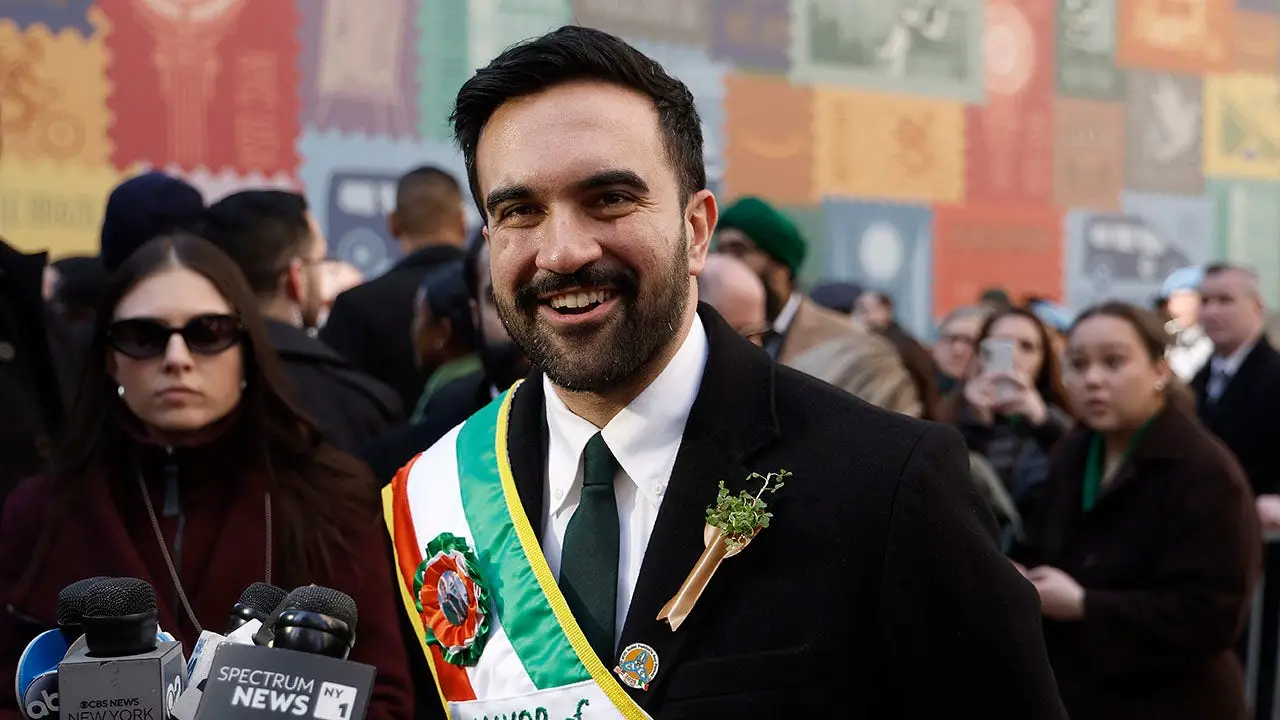
The recent annual commemoration honoring Israel in New York City saw a notable absence from the city’s top elected official. Mayor Zohran Mamdani opted out of participating in the traditional festivities, a decision that marked a significant departure from the established pattern of mayoral attendance at the event. While other prominent figures, including the police commissioner, government officials, and various political leaders, attended the procession, the Mayor’s non-participation immediately became a focal point for political commentary and public discussion.
The decision to skip the parade was publicly stated by the Mayor, who indicated that his stance on the policies of the Israeli government was central to his decision. This public declaration shifted the focus of the annual celebration from a simple commemoration to a point of pronounced political alignment. The manner in which the event unfolded, with the Commissioner taking a visible leadership role, highlighted the personal connections of the city’s leadership.
Significance of the Absence
The significance of Mayor Mamdani’s choice extends beyond a single ceremonial day. Traditionally, the Mayor’s presence at this particular parade has been an expected fixture, symbolizing broad municipal support for the relationship. By foregoing attendance, the Mayor elevated his political commentary, signaling a distinct and possibly adversarial position relative to the nation it honors. This action immediately fueled an environment of political critique, drawing sharp reactions from opposing political factions who used the absence to criticize his policy viewpoints.
Context and Political Ramifications
The political climate surrounding the city recently has been marked by heightened tensions, including reports of an uptick in instances of antisemitism. Against this backdrop, the Mayor’s announcement drew immediate and pointed criticism from political rivals. These critics interpreted the absence not merely as a difference in ceremonial preference, but as a deep political disagreement regarding the state of Israel. Such public critiques frame the Mayor’s stance within a broader national and ideological struggle, turning a cultural event into a highly visible political battleground.
A Tradition Under Scrutiny
The consistent expectation for civic leaders to attend major cultural events is powerful, and this occasion was no exception. The Mayor’s stated reasoning—linking his non-attendance to his articulated views on the Israeli government—effectively broke a decades-long custom of participation. This development forces observers to reconsider the roles of civic ceremony in modern politics, suggesting that in periods of intense geopolitical focus, even cultural tributes become proxy arenas for ideological debate.
About the Author