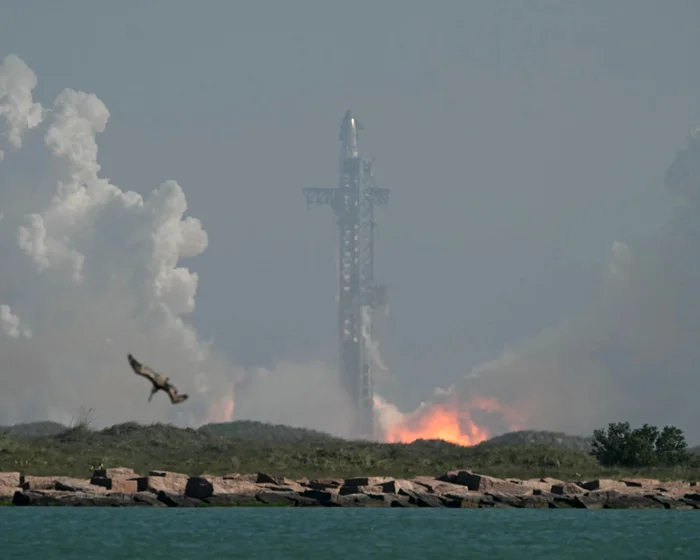
Advancing Interplanetary Travel: SpaceX Conducts Major Test Flight with Advanced Starship Vehicle
Space Exploration Technologies Corp. recently conducted a significant test launch featuring an upgraded version of its massive Starship rocket. This particular flight represents a critical developmental step in the company’s ambitious long-term goals, most notably the establishment of a sustained human presence on Mars. The immense capability displayed during the launch underscores the growing maturity of the propulsion and vehicle systems required for deep-space missions, moving beyond Earth orbit.
The test rocket departed from a launch site located in the southern region of Texas. During this demonstration, the vehicle carried a payload consisting of twenty mock Starlink satellites. The successful launch profile and operational testing of the integrated system are pivotal for the next phases of development. Furthermore, the advanced nature of this hardware means it holds direct relevance to NASA’s ongoing preparations for returning astronauts to the lunar surface.
Understanding the Significance of the Test
This latest demonstration is more than just a routine launch; it signifies a major leap in the scale and reliability of the vehicle architecture. Developing a system capable of launching such enormous payloads across global distances requires mastering several complex engineering challenges simultaneously, including propulsion efficiency, thermal management, and autonomous trajectory correction. The cumulative data gathered from these increasingly powerful test flights is essential for solidifying the vehicle’s readiness for crewed, deep-space operations.
What This Means for Future Space Exploration
The successful progression of the Starship program has profound implications for the entire commercial space sector and humanity’s reach into space. By building a reusable, super-heavy-lift system, the effort aims to dramatically lower the cost and complexity associated with transporting massive amounts of cargo and personnel off-world. This capability fundamentally changes the economics of deep-space missions, making sustained habitation off-world a more viable prospect than ever before.
Moreover, the vehicle’s intended role in supporting lunar missions reinforces its position as a primary platform for national and international space exploration efforts. The reliable deployment of such power places SpaceX at the forefront of private industry involvement in realizing long-term objectives like establishing lunar bases and, ultimately, Martian outposts. The continuous refinement through these vigorous test flights drives technological innovation across multiple engineering disciplines, setting new benchmarks for rocketry.
About the Author




