Street Art Reinvigorates Debate Over Public Memory and Historical Statuary in London
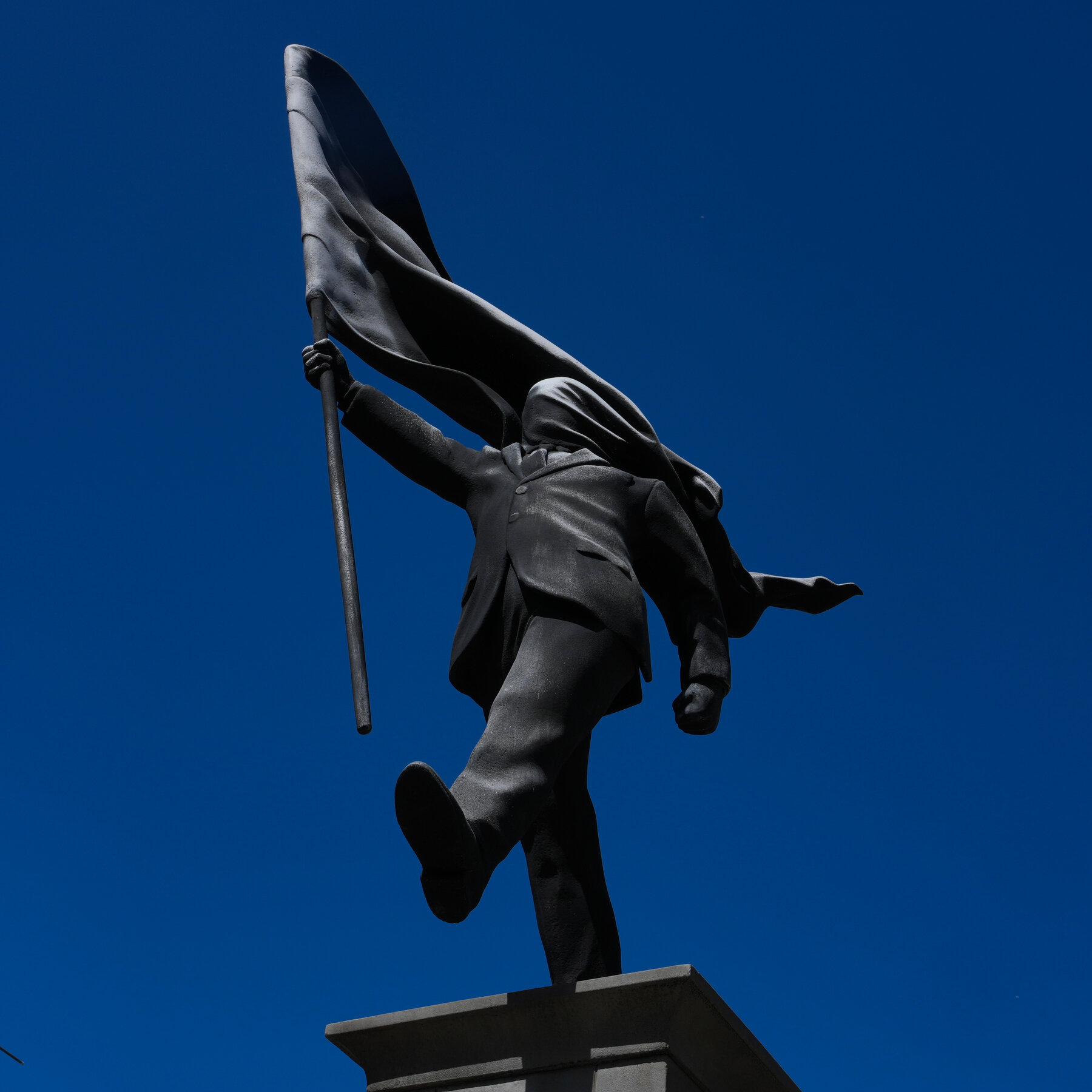
The unexpected appearance of a piece of contemporary street art in a traditionally monumental area of Central London has sparked immediate public discussion. The artwork, characterized by a depiction of a figure marching while obscuring their face with a flag, has placed itself directly in proximity to established statues commemorating 19th-century military and colonial figures. This juxtaposition has swiftly drawn attention to the ongoing dialogue regarding public space, memory, and who gets commemorated in grand civic settings.
Instead of being a subtle addition, the piece acts as a visual counterpoint, forcing passersby and cultural observers alike to reconsider the narratives embedded within the city’s existing bronze tributes. The subject matter—a masked march—carries an inherent layer of ambiguity and defiance, prompting questions about anonymity, protest, and the right to silence within the historical record displayed on pedestals throughout the city center.
The Significance of the Placement
The primary impact of this artwork stems not just from its existence, but from its strategic location. When art confronts established historical markers, the resulting conversation inevitably revolves around themes of cultural accountability. The contrast between the modern, ephemeral street installation and the permanence of the older statues creates a palpable tension. It prompts viewers to move beyond simple recognition of a figure and instead analyze the *context* of that recognition itself.
Interrogating Civic Narratives
This kind of spontaneous artistic intervention forces a broader examination of how public spaces curate collective memory. By situating a potent, faceless image near figures representing eras of empire and conflict, the artwork compels a re-evaluation of which stories are deemed worthy of enduring public commemoration. It suggests that public sculpture is rarely a neutral act, but rather a curated selection of historical narratives that often favor certain viewpoints over others.
Contextualizing the Debate
The dialogue ignited by this street piece mirrors larger, ongoing cultural conversations across major global cities. These discussions frequently challenge established canons of art and history, advocating for a more inclusive and critical understanding of the past. For London, a city steeped in imperial history, such an artwork acts as a timely catalyst, encouraging residents and visitors alike to look up from their feet and critically assess the monuments surrounding them.
Broader Implications for Public Art
Ultimately, the piece functions as a temporary intervention in the visual grammar of the city. It highlights the dynamic relationship between art, commerce, and civic identity. While the specific artist remains part of the intrigue, the enduring residue of the artwork’s impact is the heightened critical awareness it sparks. It reminds the public that the city’s visible past is often a negotiated, and occasionally contested, narrative.
About the Author