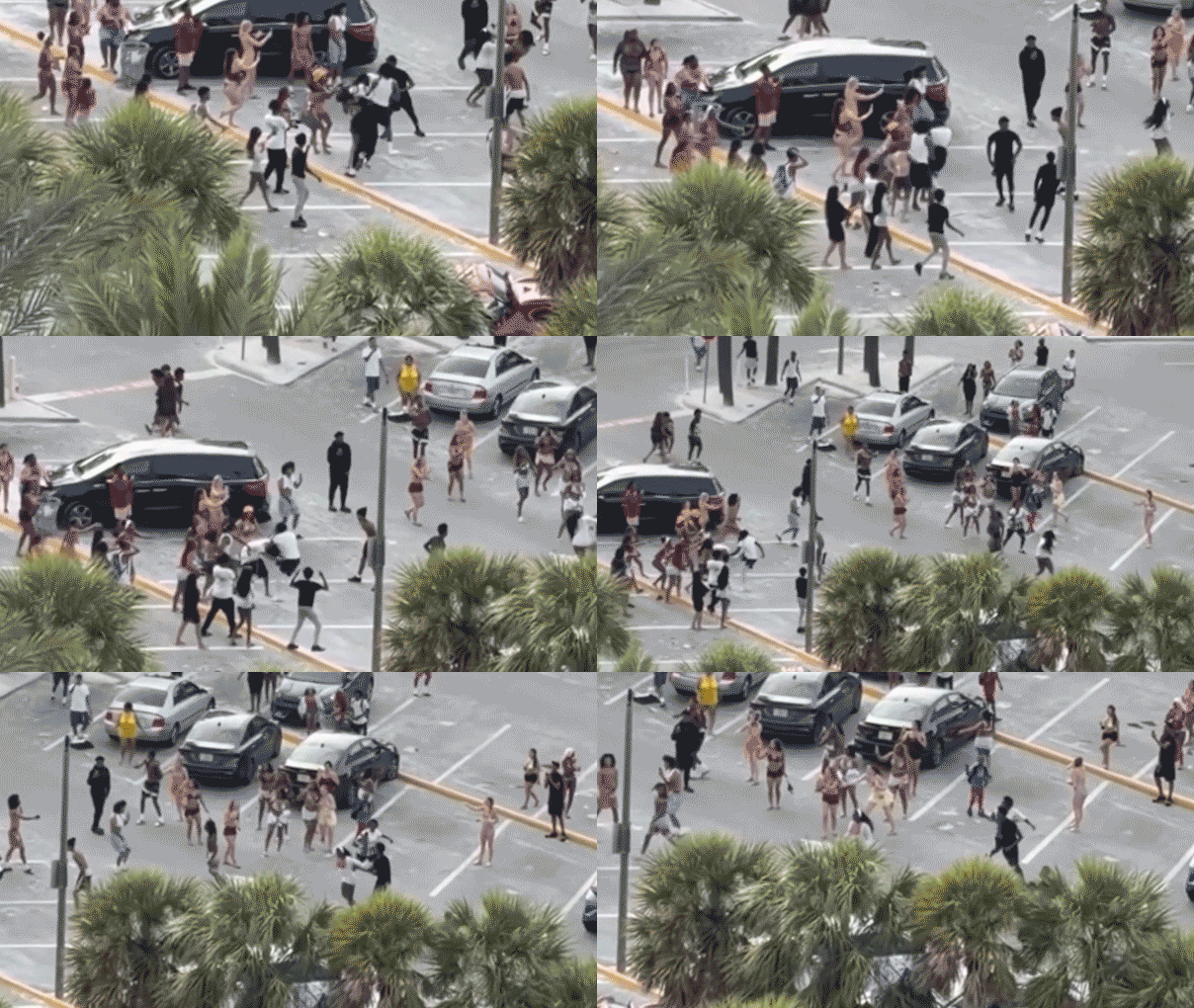
Rising Incidents: Authorities Tackle Spreading Wave of Social Media-Fueled Public Disorder Across the Country
As the summer season begins, law enforcement agencies nationwide are reporting a noticeable uptick in disruptions centered around unauthorized, large-scale gatherings. These events, often fueled and publicized through social media platforms, have placed local police departments in reactive roles across various metropolitan areas. From incidents involving swarms of vehicles to large groups congregating in public parks or near sporting venues, the pattern suggests a growing trend of public disorder activity that local authorities are grappling to contain.
Reports indicate that numerous jurisdictions have recently seen multiple arrests in rapid succession, documenting clashes stemming from these unplanned assemblies. Specific events have taken place in diverse settings, including downtown intersections, recreational beaches, and major civic gathering points. The scope of these incidents suggests that they are not isolated occurrences but rather part of a wider, digitally amplified pattern of behavior that challenges traditional concepts of public space management and crowd control.
The enforcement response has been visible, with law enforcement deploying various resources to manage the situation. Actions have ranged from making multiple citations and making arrests related to disorderly conduct to responding to more serious incidents involving property damage or threats to public safety. This increased deployment signals a heightened level of vigilance from police services across the board.
What This Means: A Strain on Community Order
The surge in these events highlights a significant challenge in modern policing: the difficulty of managing spontaneous, large-scale gatherings orchestrated or amplified via social media. When events are publicized online without established permitting or clear guidelines, authorities are placed in a reactive posture, often scrambling to restore order after the fact. The impact is a temporary, yet visible, strain on local community order and safety protocols.
Furthermore, these incidents force a reevaluation of how public spaces—like parks, downtown squares, and stadiums—are designated and controlled. Authorities are finding themselves needing to balance the rights of citizens to assemble with the imperative to maintain public safety, a dynamic that is becoming increasingly complicated by digital connectivity.
Contextualizing the Challenge
Official statements circulating in the wake of some of these gatherings emphasize a clear message of zero tolerance for illegal activities within public domains. This reflects a policy reinforcement by local law enforcement aiming to deter future unauthorized assemblies. The pattern suggests that while the desire for communal gathering remains strong, the means of assembly and the associated level of public accountability are becoming major points of friction between organizers and governing bodies.
About the Author