UK Court Slaps Jail Time on Activists Following Protest at Arms Manufacturer
A UK court recently imposed significant prison sentences on four activists associated with the Palestinian Action group following their participation in a raid on an Israeli weapons manufacturing facility. The sentencing was delivered after the individuals were found guilty of multiple offenses, including criminal damage and assault. The presiding judge strongly characterized the actions taken during the protest as constituting a ‘terrorist act,’ moving beyond the specific charges of property damage and violence.
The activists claimed their objective for targeting the facility was to disrupt or destroy drone and weaponry systems that they alleged were intended for use in the Gaza Strip. However, the judiciary viewed the incident through the lens of national security, linking the substantial damage to the weaponry to a broader aim of influencing British government policy and intimidating the major Israeli defense contractor.
What This Means
The judgment establishes a high threshold for defining political protest when it involves damage to sensitive industries. By labeling the coordinated action as an act of terrorism, the ruling indicates that the court views the scale and nature of the destruction—even if directed against military-industrial hardware—as justifying the harshest criminal penalties. This legal interpretation significantly impacts the scope of permissible protest action against defense and technology sectors.
Background and Context
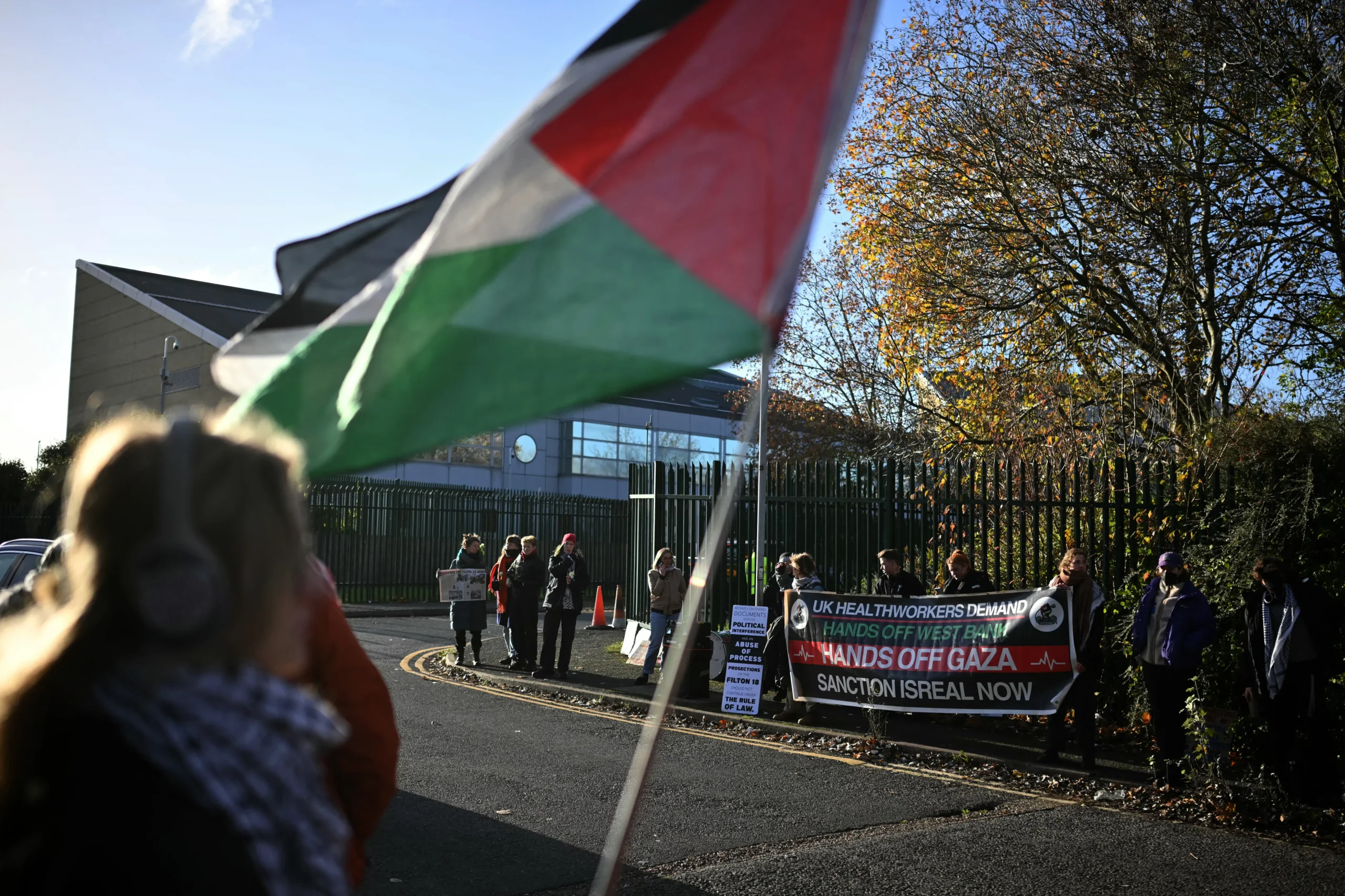
The conviction came after the activists were initially charged regarding the incident at the Elbit Systems site. In addition to convictions for damaging property, one of the individuals was also found guilty of using excessive force against an officer of the law during the ensuing confrontation. The controversy surrounding the event was substantial, leading to large public demonstrations both outside the courtroom supporting the activists and leading to separate arrests of dozens of other supporters.
Those who support the protestors argue that such direct action constitutes a moral imperative rather than a criminal enterprise. They contend that by targeting the manufacturing facilities, the activists were actively undermining the supply chain of weaponry contributing to the humanitarian crisis in Gaza. This ongoing legal and political struggle highlights the extreme tension between the right to protest, the safeguarding of national industrial assets, and international conflicts.
About the Author