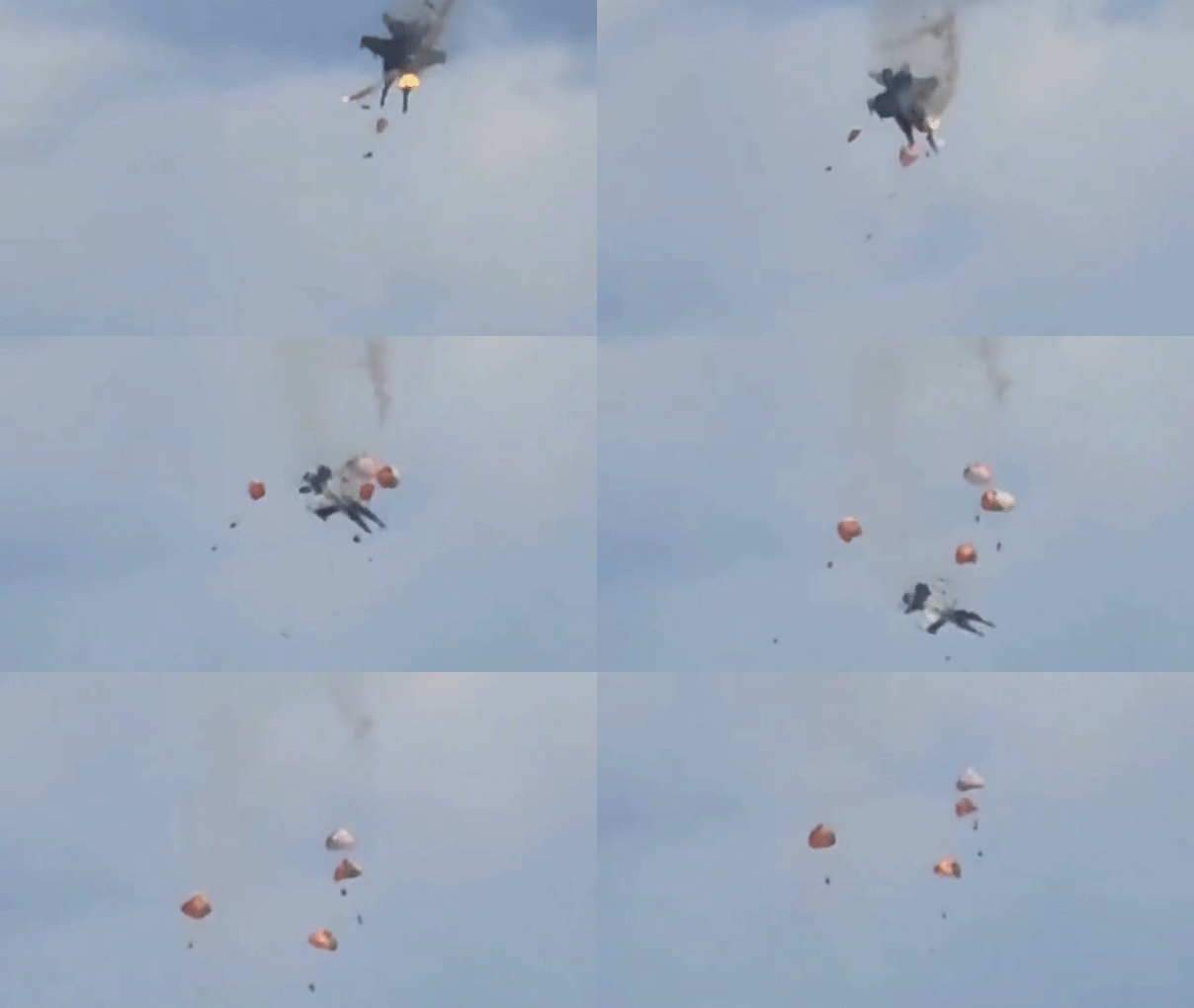
Mid-Air Incident at Idaho Air Show: How Crew Safety Was Prioritized After Growlers Collide
During the annual Gunfighter Skies Air Show held near Mountain Home Air Force Base in Idaho, a sequence of unexpected events unfolded when two U.S. Navy EA-18G Growler electronic attack aircraft were involved in a mid-air collision. The incident occurred during the second day of the demonstration, prompting immediate attention from emergency services and military personnel.
Despite the dramatic collision captured on video, military officials confirmed that the highest priority was given to the safety of the flight crews. All four personnel aboard the aircraft successfully executed emergency ejections. Following the incident, the focus immediately shifted to the recovery and assessment of the ejected crew members by medical teams and first responders at the scene.
The Operational Implications of the Event
The involvement of these advanced electronic warfare platforms in a public display underscores the inherent risks associated with high-performance military aviation demonstrations. While the initial concern was the physical impact of the aircraft colliding, the swift and successful actions of the aircrews highlight rigorous training protocols. The response from local first responders and military incident command ensured that all necessary safety measures were enacted immediately following the airborne mishap.
Context of Air Show Safety Protocols
Air shows are complex logistical undertakings, merging the excitement of public spectacle with the precision demands of military flight operations. The participation of specific squadrons, such as the Electronic Attack Squadron (VAQ) 129, indicates that the aircraft were engaged in planned training profiles augmented for public viewing. Such events necessitate meticulous risk assessment and robust contingency planning to manage potential emergency scenarios, including mechanical failure or collision during formation flying.
Background of the Aircraft
The EA-18G Growler is a specialized variant of the existing Growler family of aircraft, designed primarily for electronic attack missions. These jets are crucial assets in modern naval operations, tasked with disrupting enemy communications and radar systems. Their presence at the air show meant they were operating in a highly visible and dynamic training environment, making the safety procedures utilized during this incident even more critical to observe and validate.
The overall sequence—from the initial collision to the safe ejection of all crew members—demonstrates a layered system of safety redundancies inherent to modern military aviation. Official statements confirmed that while the aircraft suffered damage, the successful emergency procedures by the crew maintained the highest level of safety for the personnel involved, ensuring a positive outcome despite the dramatic nature of the air incident.
About the Author