Legal Defense Shifts Focus: Accused of Harassing Marine Mammal Claims Intent Was Turtle Protection
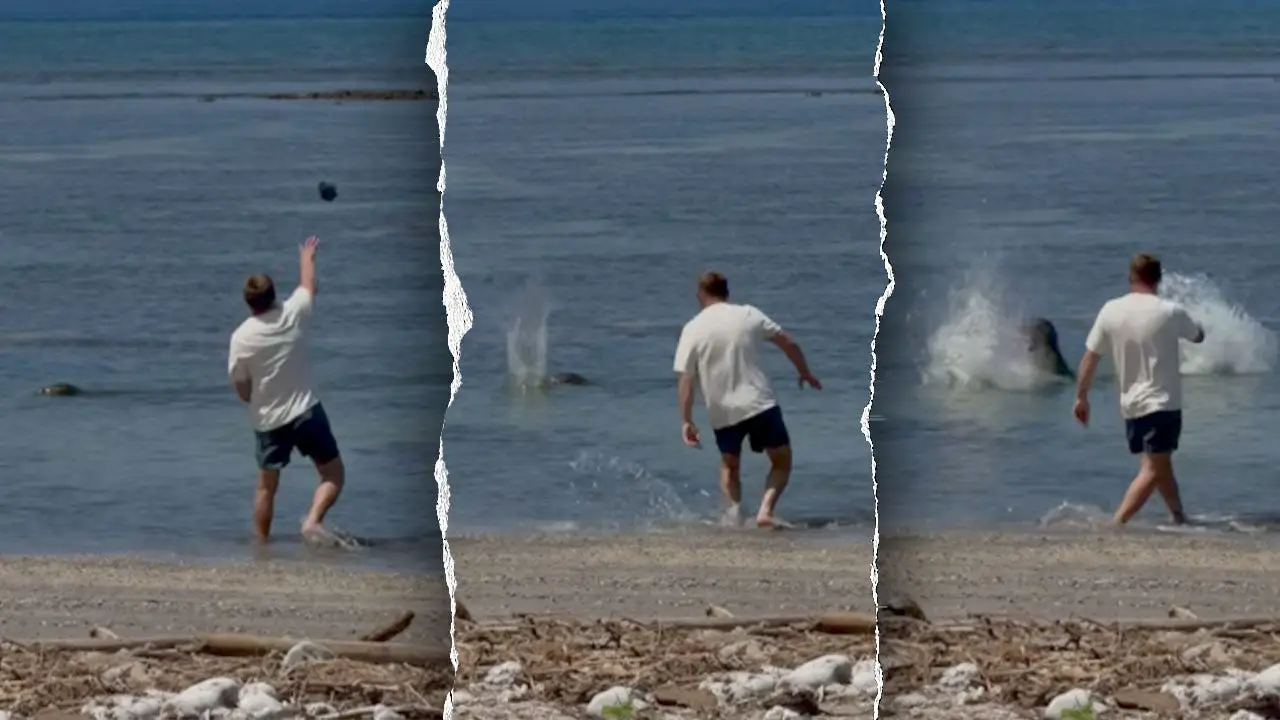
The public outcry following a viral video showing an individual near an endangered Hawaiian monk seal has been complicated by a defense strategy that attempts to recontextualize the alleged incident. Igor Mykhaylovych Lytvynchuk, 38, faces serious federal charges stemming from the alleged harassment of the rare marine mammal. While the initial footage drew widespread condemnation, his legal representation has publicly asserted that the action taken by the client was not an act of malice or injury toward the endangered seal. Instead, the defense contends that the true motivation behind the behavior was an effort to protect other vulnerable wildlife present in the area.
Specifically, according to the attorney, Lytvynchuk’s actions were rooted in a misguided effort to safeguard sea turtles resting on the coastal rocks. This narrative represents a significant shift from the focus on the endangered monk seal itself. The legal proceedings, which involve charges related to violating the Endangered Species Act and the Marine Mammal Protection Act, underscore the seriousness of the alleged violation. If convicted on these federal charges, the penalties could include substantial fines and significant prison time, highlighting the gravity of protecting vulnerable species.
Significance of the Legal Argument
The defense’s assertion that the intent was turtle protection rather than seal harassment attempts to mitigate the perception of criminal negligence. By focusing on a perceived protective motive—guarding nesting or resting turtles—the defense seeks to persuade legal authorities and the public that the act was driven by misguided stewardship rather than disregard for wildlife law. This line of reasoning aims to challenge the narrative of deliberate endangerment and introduce a layer of misunderstood concern for other protected creatures found along the coastline.
Context of Endangered Species Legislation
The charges themselves are deeply embedded in federal wildlife protection statutes. The Endangered Species Act and the Marine Mammal Protection Act establish stringent federal guidelines governing human interaction with vulnerable wildlife populations. These laws reflect a broader national commitment to conservation, setting high bars for accountability when human activity potentially disrupts the survival or habitat of rare animals like the Hawaiian monk seal. Such legislation ensures that incidents involving critically endangered species trigger immediate and severe federal legal responses, regardless of the alleged primary target of the disturbance.
Procedural Impact
The case highlights the complexity of enforcing environmental law when an incident unfolds in a dynamic natural setting. While the initial focus is on the federal violations tied to the monk seal, the defense’s introduction of the sea turtles introduces a broader ecological dimension. Legal strategy in such high-profile wildlife cases often involves differentiating between the *act* itself, the *stated intent*, and the *legal consequence* under existing environmental statutes. The outcome will ultimately hinge on interpreting Lytvynchuk’s actual mindset during the moment the incident occurred.
About the Author