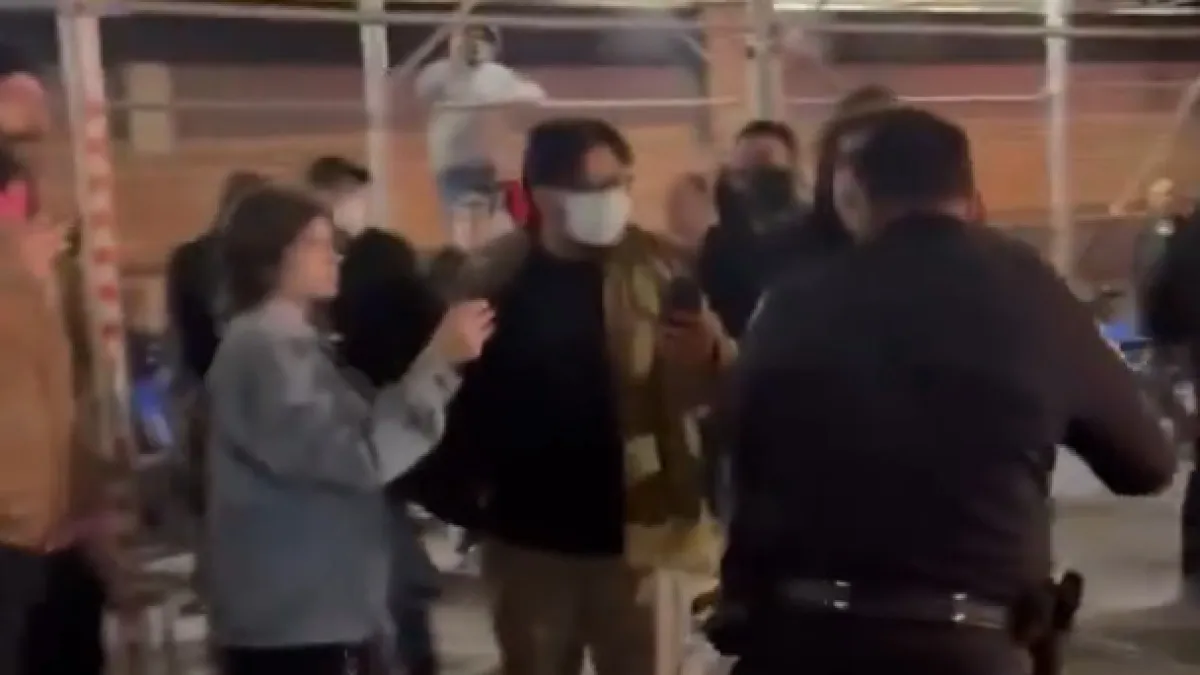
Tensions escalated dramatically in a New York location on Saturday night after federal immigration agents made an arrest in Brooklyn. The action quickly galvanized a large group of people who gathered at the site, leading to immediate and significant civil disorder. The initial enforcement action involving a Nigerian national rapidly became the focal point for widespread protest, transforming the area into a scene of public confrontation.
As the detention process unfolded at a local medical facility, the gathering swelled into an organized demonstration. The ensuing situation was marked by volatile interactions between the assembled protestors and law enforcement personnel. Reports indicate that confrontations broke out, leading to arrests and altercations involving multiple parties present at the scene.
These events highlight a recurring point of friction between immigration enforcement operations and community activism. The arrest itself served as a catalyst, prompting a significant public outcry that manifested as physical protest activity surrounding the individual taken into custody and the medical facility involved.
What This Means: Impact of Enforcement Actions on Public Space
The swift escalation from a discrete law enforcement action to widespread public clashes underscores the deep social fault lines surrounding immigration enforcement. When federal authorities conduct visible arrests, especially in densely populated urban areas, the predictable outcome is significant public mobilization. The reaction suggests that community sentiment is highly charged regarding the methods and frequency of such operations.
For the city, such incidents place law enforcement in a difficult position—managing a volatile crowd while maintaining operational integrity during enforcement duties. It underscores the ongoing tension between governmental powers to enforce immigration law and the civic right to assembly and protest. The aftermath typically involves increased security presence and subsequent community dialogue regarding civil liberties.
Background and Context: Patterns of Protest Response
Historically, immigration detentions have served as flashpoints for civil activism across various metropolitan centers. In many instances, the immediate aftermath of an arrest prompts demonstrations that quickly grow beyond protest and into confrontation. These demonstrations are frequently directed not only at the agents involved but also at the systems and policies that permit such arrests.
The gathering at a medical center, which is often the point of initial processing or transfer, adds another layer of complexity. These facilities become symbolic sites where enforcement actions intersect directly with routine public life, drawing intense scrutiny. The collective response demonstrates a high level of community organization and sustained concern regarding the impact of deportation procedures on the immigrant community.
About the Author