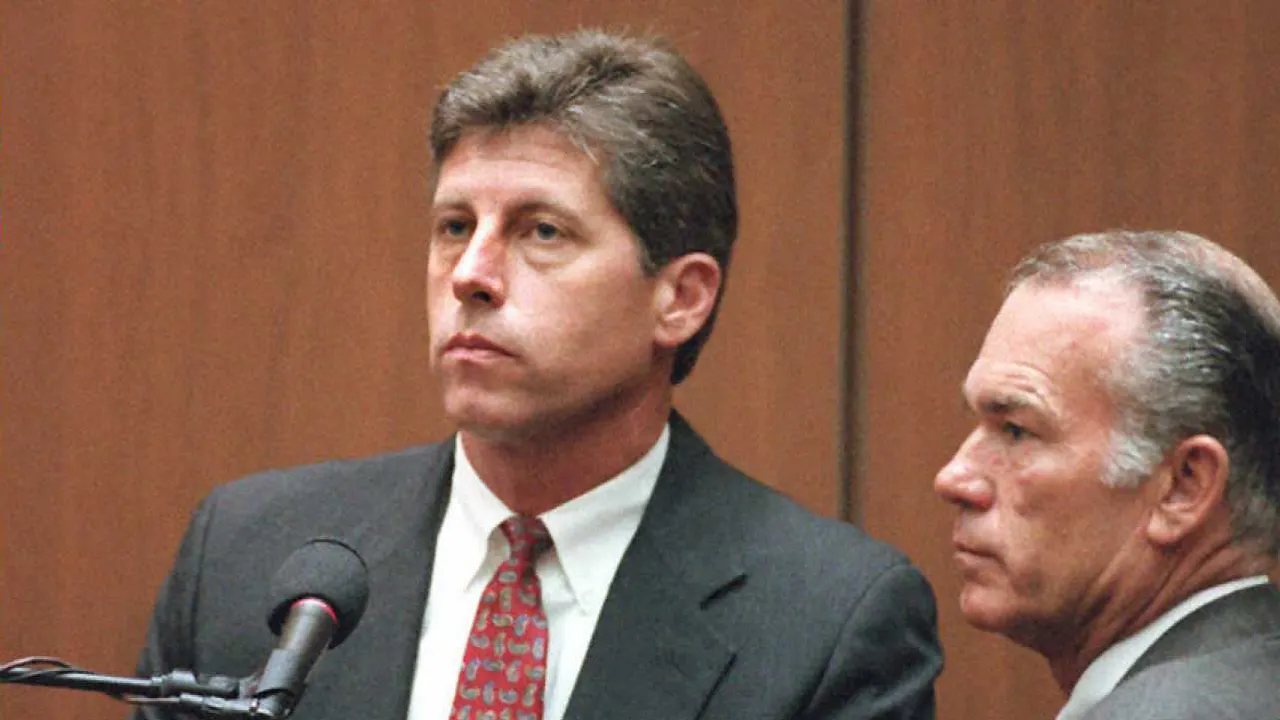
Investigating the Shadow: The Life and Public Impact of Detective Mark Fuhrman
The passing of former Los Angeles Police Department detective Mark Fuhrman marks the conclusion of a public life deeply entangled with one of the most high-profile criminal cases in modern American history. Fuhrman, who died at the age of 74, remains a controversial figure whose name is inextricably linked to the dramatic investigation surrounding the murders of Nicole Brown Simpson and Ron Goldman. His career intersected with the legal proceedings in a manner that eventually placed him at the center of intense scrutiny.
Initially, Fuhrman was a crucial component of the prosecution’s case. He gained significant visibility when he was involved in discovering specific pieces of evidence, notably a bloodied glove recovered from the Simpson estate. This discovery was presented by prosecutors as a potential physical link connecting O.J. Simpson to the gruesome crime scene. However, the circumstances of his testimony and his conduct during the trial led to a profound erosion of his professional standing and public credibility.
The Turning Point of Controversy
What began as a story of forensic discovery transformed into a source of deep professional controversy. During the intense public scrutiny of the legal battle, audio recordings surfaced that contained deeply offensive and racially charged language from Fuhrman. The revelation of these statements dramatically altered how investigators, experts, and the public viewed his testimony. These recorded incidents overshadowing his initial involvement in finding evidence shifted the narrative surrounding the entire investigation, making his role far more complex than that of a simple key witness.
Significance and Context
Fuhrman’s involvement provides a stark, illustrative example of how misconduct by law enforcement figures can profoundly impact major criminal investigations. His story underscores the critical nature of police testimony and the importance of maintaining ethical conduct within the justice system. Experts have noted that while he played a direct role in bringing certain pieces of incriminating evidence to light, the damage done to his credibility through subsequent revelations proved more impactful than the physical evidence itself.
Throughout the decades following the trial, Fuhrman’s presence in the legal consciousness remained significant, not just for the details of the case, but for the subsequent examination of police integrity. His life trajectory serves as a reminder of the scrutiny applied to law enforcement actions when they intersect with national media attention and landmark legal proceedings. His passing concludes a chapter connected to this pivotal moment in American criminal jurisprudence.
About the Author