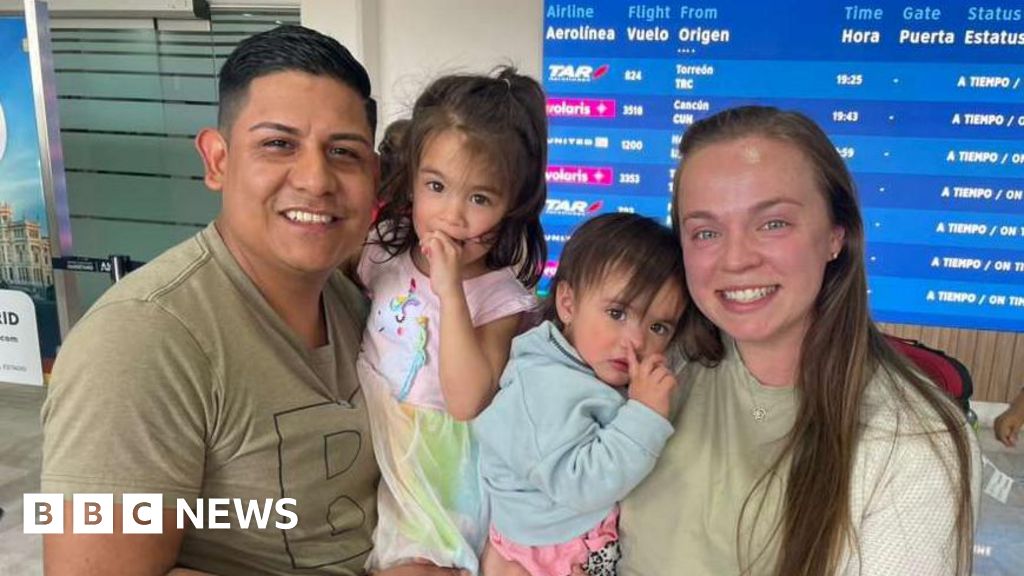
Separating Lives for Love: The Complex Reality of Family Ties Amid Immigration Crackdowns
For many families, the bonds of marriage and parenthood create deep, undeniable connections that defy national borders and legal restrictions. The challenges faced by individuals whose spouses have precarious immigration status highlight a difficult reality: sometimes, the strength of a personal commitment necessitates an extraordinary upheaval of life. These situations test not only the resilience of the family unit but also the boundaries of current immigration law.
The decision to relocate across international lines, leaving behind familiarity and established lives, is often portrayed as a last resort, a consequence of heightened enforcement actions. For some, maintaining physical closeness with a partner outweighs all other considerations, leading to profound personal choices that redefine what ‘home’ truly means.
The Strain Between Law and Kinship
The dynamics surrounding immigration status create a severe friction point between established legal frameworks and the fundamental human need for family unity. When one spouse is a citizen and the other is undocumented, the path to permanent legal status through marriage can become extraordinarily complex. Reports indicate that even solid marital bonds do not guarantee a straightforward route to residency, especially if the initial entry into the country was unauthorized. This vulnerability means that the threat of detention or deportation can instantly fracture a family’s perceived stability.
Official estimates suggest a substantial number of U.S. citizens are married to individuals without legal documentation. When political climates emphasize strict enforcement and border security, the implications for these mixed-status families are immediate and profound. The choice many face is not merely logistical, but deeply existential: maintaining the legal status quo versus choosing the unwavering presence of a spouse.
Navigating a Changed Landscape
Official statements indicate that administrations committed to stringent immigration enforcement have amplified efforts to detain and remove individuals. This intense focus has placed immense pressure on the daily lives of undocumented immigrants and their immediate families. For those caught in the crossfire, the experience involves unimaginable disruption—the sudden removal of a partner and children from their routine life.
These circumstances force individuals to make drastic decisions, sometimes relocating entirely to circumvent immediate threats. While the journey of rebuilding life in a foreign land, perhaps without speaking the local language, presents immense hurdles, the emotional gravity of togetherness often becomes the primary motivating force. For these families, the commitment to staying united proves to be the most defining, if difficult, aspect of their modern narrative.
Implications for Family Rights
The experiences of these families underscore a critical policy gap: the legal structures often struggle to accommodate the emotional and biological reality of multinational families. When enforcement priorities are heavily weighted toward border security and deportation, the established rights and protections afforded to the familial unit, particularly when crossing international lines, are severely tested. These stories prompt a broader discussion about whether current immigration laws sufficiently prioritize the preservation of intact family units above all else.
About the Author