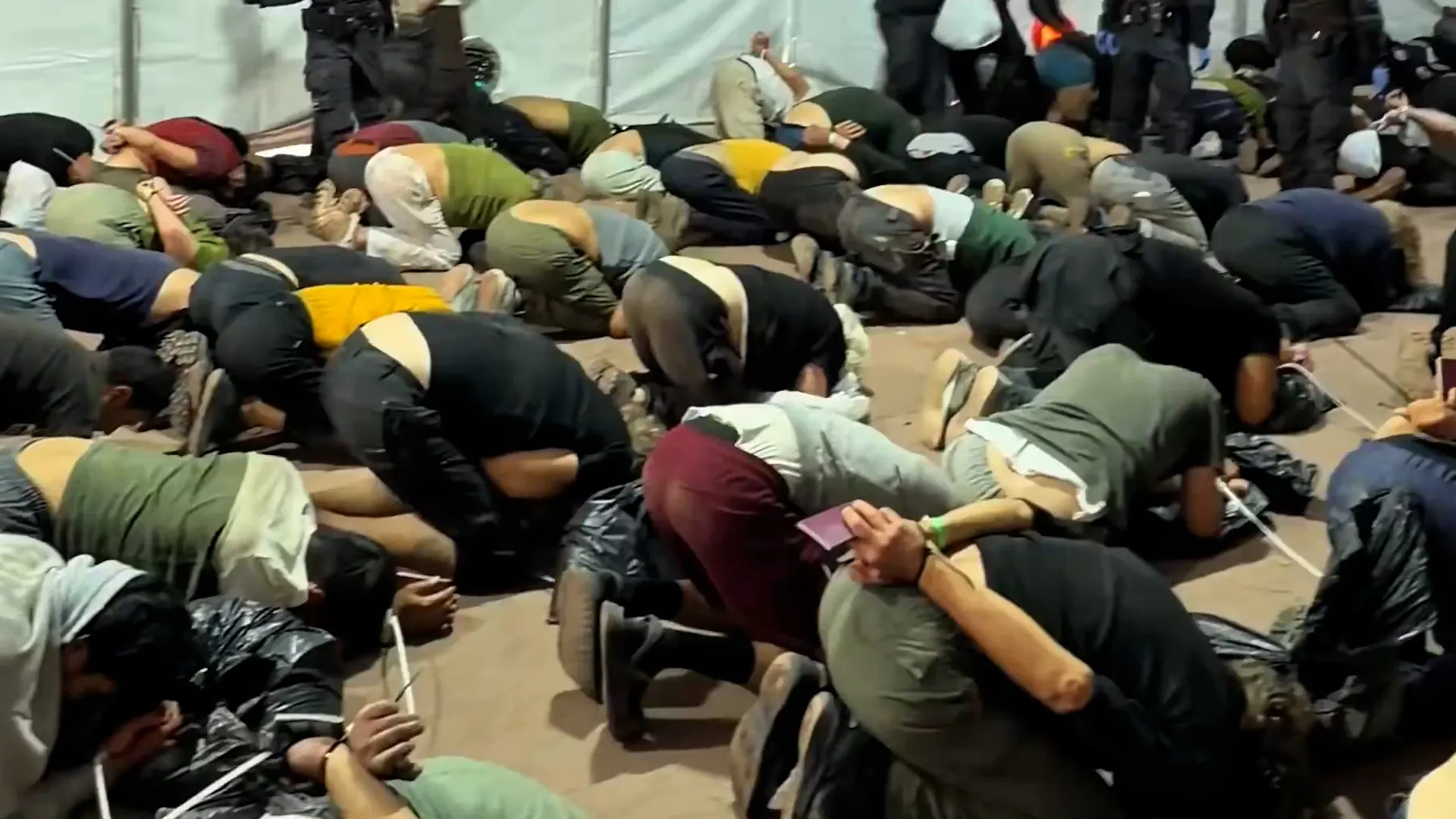
Controversy Erupts as Israeli Minister Posts Taunting Video of Detained Activists
Significant controversy has arisen following the circulation of a video purportedly shared by prominent Israeli minister Itamar Ben-Gvir. In the footage, the minister is observed making mocking gestures toward activists who were detained while attempting to reach Gaza. The video was published online with a caption that reportedly directed a welcome to the arrested individuals.
The detained activists, who were associated with a global flotilla movement, were reportedly apprehended by Israeli forces in waters considered to be international jurisdiction. The content of the video itself depicts the individuals restrained and kneeling, set against the backdrop of Israel’s national anthem, amplifying the perceived hostility of the display.
Significance and Impact of the Display
The release of such a video has drawn sharp international scrutiny, raising immediate concerns regarding the treatment of civilian protestors and the nature of the detention procedures employed by Israeli authorities. The highly visible nature of the taunting adds a layer of political confrontation to an already volatile situation. Critics argue that such public displays undermine any claims of humanitarian concern or adherence to international standards of protest rights.
The incident escalates long-standing tensions surrounding international access to Gaza and the freedom of movement for advocacy groups. For human rights organizations, the footage serves as a potent example of perceived overreach, suggesting that detentions are accompanied by displays intended to intimidate rather than simply enforce law.
Context of the Flotilla Movements
Flotilla movements have historically been utilized by various advocacy groups to draw international attention to the humanitarian and political situation in Gaza. These actions typically involve transporting supplies or personnel toward the Gaza Strip, often traversing waters that are subject to varying levels of international maritime law and jurisdictional dispute. Such expeditions inherently place activists in legally complex and high-tension environments.
When confrontational incidents occur, the ensuing legal and political aftermath often becomes highly public. The documentation and subsequent sharing of material related to these detentions, as seen with this video, immediately becomes a flashpoint for international diplomatic discussions regarding maritime law, protest rights, and governmental accountability in contested zones.
Broader Implications for Civil Liberties
This episode prompts a wider examination of how governments manage and communicate during periods of civil unrest or blockade enforcement. The element of theatrical mockery, as opposed to purely procedural detention, changes the narrative from one of law enforcement to one of political antagonism. Experts suggest that the way authorities handle and subsequently communicate about such arrests speaks volumes about the underlying political climate and the level of tolerance for dissent.
The focus shifts beyond the immediate act of detention to the political messaging accompanying it. Such content can contribute to a cycle of mistrust, making future international coordination or humanitarian efforts more difficult to organize and legitimize in the eyes of global observers.
About the Author




