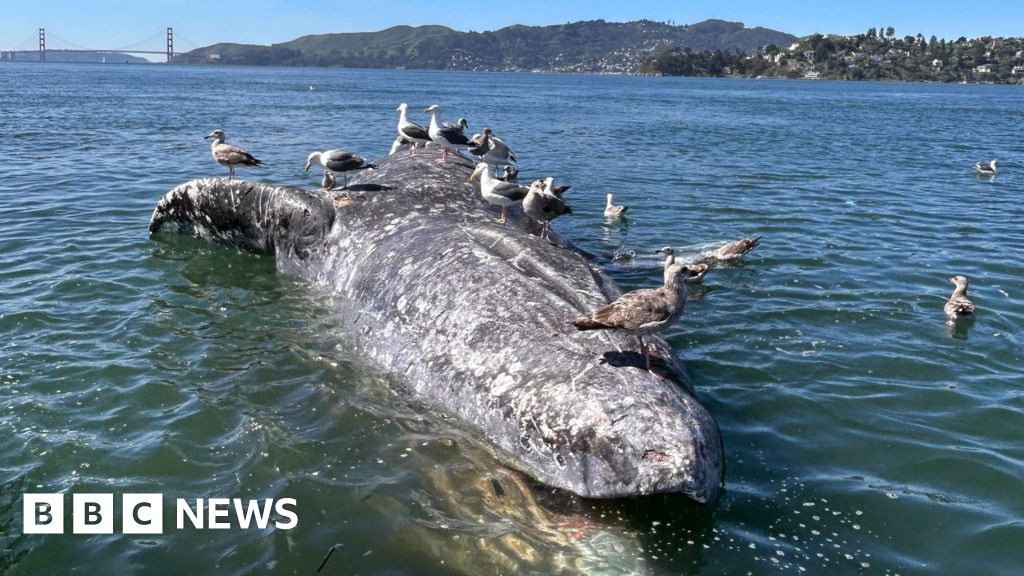
Understanding the Decline: Why Gray Whales Are Dying in San Francisco’s Bay
Scientists are actively investigating a concerning rise in undernourished and deceased Eastern North Pacific gray whales found within the confines of San Francisco Bay. This research examines complex interactions between dwindling food supplies, climate shifts, and human activities that may be impacting the species’ survival.
Historically, the large 4,140-square-kilometer estuary was not a typical stopover point for gray whales, which normally bypass the area during their vast migratory journeys between the Arctic breeding grounds and Baja California. However, recent observations indicate that the whales are increasingly utilizing the bay, potentially due to resource depletion in their usual feeding areas.
Researchers examining mortality rates have noted that many whales entering the bay appear notably emaciated for this time of year. This physical condition suggests that insufficient energy reserves may be forcing these adults and juveniles into the estuary out of desperation or hunger. While initial concerns point toward starvation, the data suggests a more complex picture involving multiple threats.
A significant finding from the recent study analyzing photographs and carcasses since 2018 highlights the danger posed by human infrastructure. A substantial portion of the observed fatalities have occurred following interactions with vessels, pointing to vessel strikes as a major contributing factor to the elevated death rate within the bay.
- Significance of the Location: San Francisco Bay, the largest west coast estuary, is serving as an unscheduled habitat for the migrating gray whales.
- Observed Condition: Many whales found are visibly thin, suggesting energy deficiencies necessary for completing their extensive migratory cycle.
- Migration Pattern Shift: The species was not historically documented stopping consistently within the bay during its travel route.
- Primary Threat Identified: Analysis of carcasses indicates a high susceptibility to death due to collisions with boats and ships.
What This Means for Conservation
The increased presence and mortality rates in San Francisco Bay are critical indicators of broader ecological stress. The behavior of these whales—being drawn to the bay—is a signal that the environmental conditions, particularly prey availability or climate stability, along their traditional routes are changing. Understanding why they are stopping and what is depleting their energy reserves is crucial for developing effective conservation strategies.
From a human impact perspective, the findings underscore the need for stricter regulation and mitigation measures concerning maritime traffic within large, biologically sensitive estuaries. The confluence of natural decline (lack of food) and anthropogenic threat (vessel strikes) requires a multi-faceted response.
Background Context: The Whale Migration
Eastern North Pacific gray whales undertake one of the longest annual migrations of any mammal, traveling an estimated 15,000 to 20,000 kilometers roundtrip. This arduous journey is necessary for them to reach optimal breeding and calving grounds. These long-distance movements make the animals highly susceptible to localized threats when they deviate from expected paths.
Sources: Reporting from journals including *Frontiers in Marine Science*.
About the Author