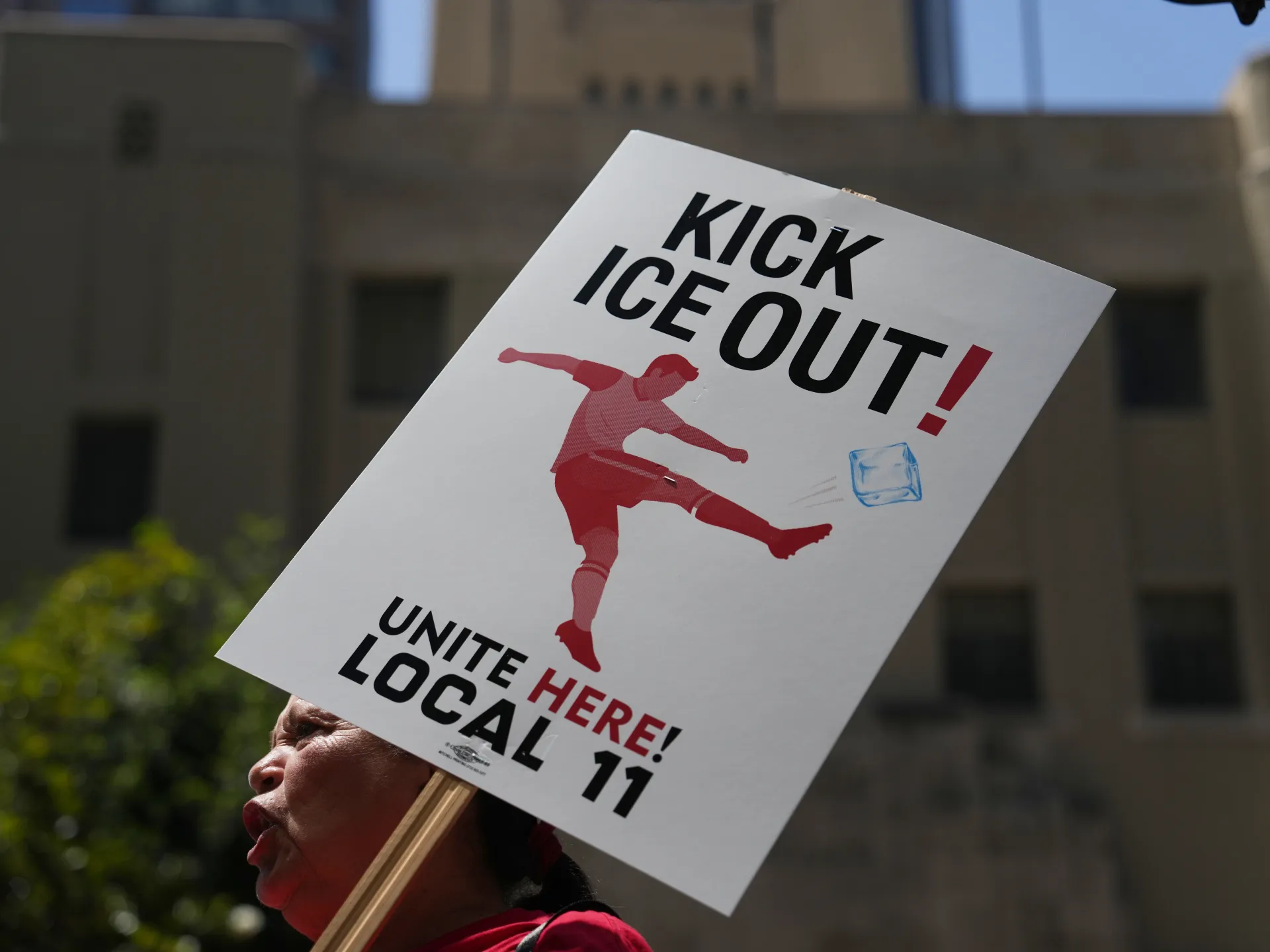
As Los Angeles readies the SoFi Stadium to become a major hub for the FIFA World Cup in 2026, a significant labor dispute has emerged focused on the type of security and enforcement personnel present at the venue. Workers, represented by a local hospitality union, have declared their readiness to strike if federal immigration enforcement agencies are deployed near or within the stadium premises during the tournament’s proceedings. Their demands center on ensuring that the atmosphere remains focused on the sporting event rather than immigration enforcement, citing concerns about creating an atmosphere of intimidation for both employees and attendees.
The union, which represents several hundred hospitality workers, has formally petitioned for federal assurances guaranteeing that Immigration and Customs Enforcement (ICE) will not have a presence during the scheduled matches. The venue is slated to host multiple games, including the opening fixture for the United States team. For the frontline employees—many of whom are involved in food and beverage service—the concern is deeply personal: the fear of harassment or detention while going to or from their shifts, or even while attending the games as supporters.
What This Means: Labor Rights Confronting International Sporting Events
This confrontation highlights a growing tension between the logistical demands of massive international events and the immediate labor rights of the workforce. For the workers involved, the perceived threat from federal enforcement agents overshadows the athletic spectacle, suggesting that the labor experience is considered inseparable from the physical safety and psychological security of the workplace. The potential strike action serves as a direct bargaining chip, intended to force negotiators to prioritize worker welfare over generalized security measures that could impact the daily lives of the staff.
Background and Context: Navigating Security Concerns
The scheduling of the World Cup requires extensive pre-planning, including administrative requirements imposed by the organizing bodies. Furthermore, the labor group has also voiced concerns regarding FIFA’s credentialing process, which mandates that all participating staff submit private identifying information ahead of the tournament. This focus on comprehensive background checks and data submission, coupled with the general concern over federal security deployment, demonstrates a broader unease among the local workforce about surveillance and control measures surrounding the massive influx of international activity.
The unrest signals that local labor organizations are positioning themselves as critical stakeholders, demanding that the celebration of global sport does not come at the expense of basic worker protections. This ongoing negotiation process frames the World Cup preparation not just as a staging of athletic competition, but as a complex negotiation over civil liberties, workplace autonomy, and the very nature of public assembly.
About the Author