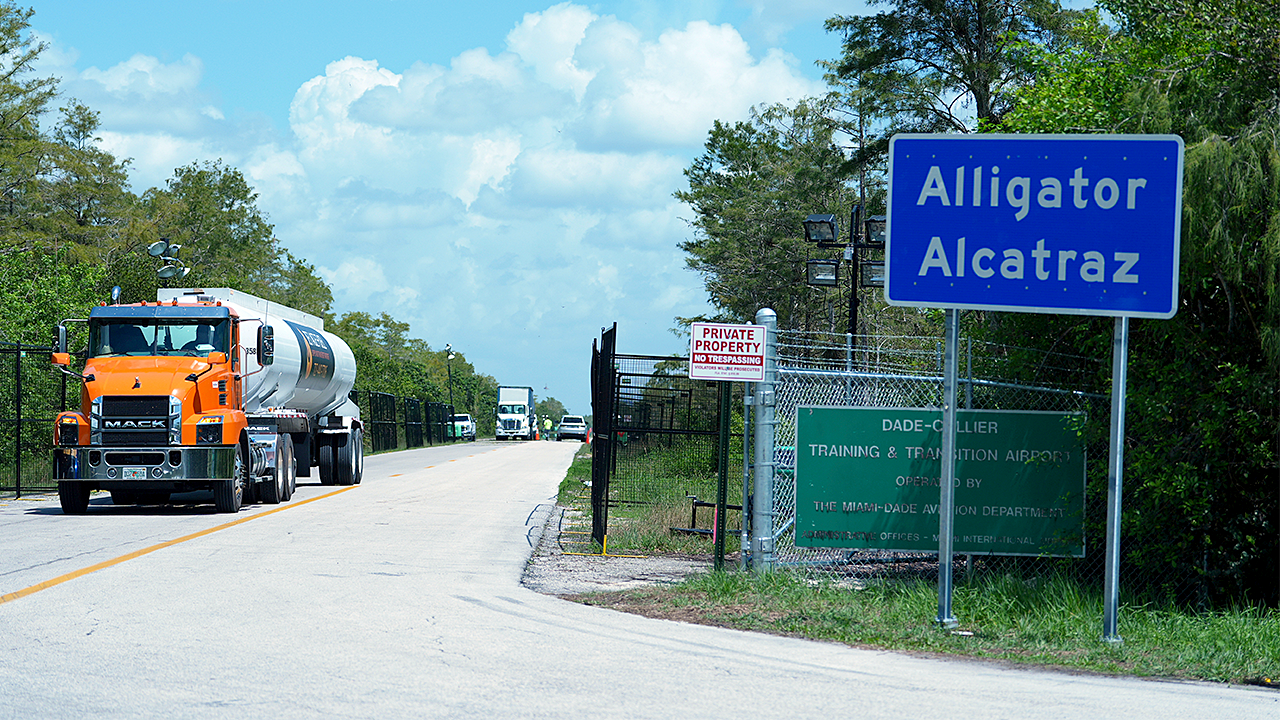
Legal Hurdles Remain for Halting ‘Alligator Alcatraz’ Despite Environmental Concerns
An appeals court has upheld the ability of a state-operated immigration facility, located within the sensitive Florida Everglades, to continue its operations. The ruling effectively rejected a judicial push to force the facility’s closure by mandating a comprehensive review of its environmental effects under federal law.
In a narrow decision, the appellate panel determined that the structure and its surrounding land were primarily under the control of state authorities. Consequently, the court ruled that the facility did not fall under the jurisdiction of federal regulations—specifically those related to environmental impact assessments—because the state, rather than a federal agency, was responsible for its construction and upkeep.
Understanding the Legal Battle Over State vs. Federal Authority
The core of the litigation revolves around which level of government holds ultimate jurisdiction over the site and its function. Advocates for closure argued that because immigration detention is an inherently federal function, the facility could not legally operate without federal oversight and adherence to stringent environmental standards, such as those outlined by the National Environmental Policy Act (NEPA). They contended that the facility’s existence and sustained operation were too deeply intertwined with federal immigration policy to be deemed purely a state endeavor.
Conversely, the ruling emphasized the financial and physical relationship between the state and the property. The majority opinion noted that the state controlled the land and bore the entire cost of the facility’s construction, pointing to the lack of direct federal financial backing when a preliminary shutdown order was issued. This factual finding formed the basis for concluding that federal environmental oversight was unnecessary.
What This Means: Implications for Infrastructure Development
The outcome signals a significant legal precedent regarding the application of environmental law to state-run infrastructure built in areas with environmental sensitivities, even if those facilities serve federal policy goals. For similar disputes across the country, the ruling suggests that physical proof of state funding and control can effectively shield a project from rigorous federal environmental scrutiny, regardless of the subject matter’s perceived federal nature.
Furthermore, the differing viewpoints highlighted by the court’s dissent reveal a deeper debate over governmental authority. Some legal experts argue that core functions like managing national borders and immigration remain uniquely vested in the federal government, suggesting that such functions should trigger federal regulatory compliance measures automatically. However, the appellate court’s decision prioritized the demonstrable, day-to-day jurisdictional control held by the state.
Context of the Detention Center
The detention center in question was established relatively recently, constructed by the state administration to support prevailing national immigration enforcement objectives. This adds a layer of political context to an already complex legal matter concerning land use and regulatory scope. While environmental protection laws are clear in their requirements for impact review, this case underscores the judicial difficulty in drawing a definitive line when state agencies utilize property to execute policies traditionally viewed as federal responsibilities. The outcome solidifies a current legal standing that favors the state’s self-determination over federal environmental intervention in facility operation.
About the Author