Echoes in the Landscape: A Family’s Living Link to Ghana’s Deep Past
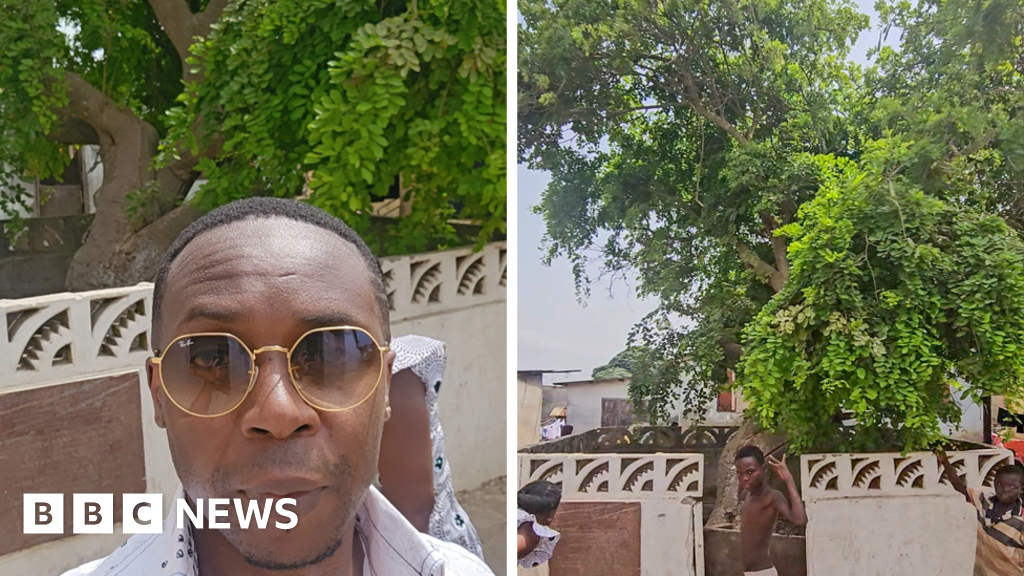
In the coastal Ghanaian town of Apam, an unassuming tree stands as more than just a fixture of the scenery. For the local community, it is part of the daily rhythm—passed by early morning fishermen and local schoolchildren. Yet, for one particular family, this single tree holds the weight of deep history, serving as a physical marker connecting their present lives to pivotal moments of their ancestors.
The physical setting itself narrates a complex historical timeline. The site is bordered by significant structures: on one side, the remnants of the Dutch Fort Patience, a testament to the colonial era when the region was a hub for trade involving commodities like gold and ivory. On the opposite side stands the Apam Methodist Church, representing the later establishment of Christian faith in the local coastal populations. These landmarks showcase centuries of external influence, trade, and spiritual transformation.
The Deep Roots of Community Memory
What distinguishes this location is the oral tradition surrounding a specific tree. Local narratives assert that the tree, which has acquired the name Santseo, was planted in the 13th century. This history is intrinsically woven into the family’s identity, reportedly linked to a royal figure named Komfo Nana Asumbia. According to family lore, the tree marks the area where the lineage settled, giving rise to the descriptive name ‘Santseo’ itself, which translates loosely to ‘Under,’ referencing the shade cast by the plant.
These accounts suggest a life preceding formal written records and major colonial outposts. The foundational stories speak of an earlier migration from Akwamufie, the historic capital of the Akwamu Kingdom. This journey is linked to Nana Asumbia, who is described not only as a figure of royal stature but also as a significant spiritual authority, suggesting a blending of governance and ritual leadership within the early community structure.
Significance Beyond the Surface
The enduring importance of this tree lies in its function as a living archive. It provides a tangible anchor for oral histories that otherwise might fade. It illustrates a pattern common in many historic coastal communities: the visible markers of major historical forces—the forts, the churches—are set against a backdrop of persistent local life, symbolized by the natural features that have withstood these sweeping changes. The tree represents the unbroken continuity of familial presence against the backdrop of shifting political and mercantile tides.
Context of Settlement and Identity
The narrative highlights a rich interplay between indigenous tradition and external impact. While the presence of established European trade centers and organized religion profoundly shaped the visible architecture of the town, the family’s connection to the tree points to an older, foundational settlement pattern guided by spiritual and familial roots. The site therefore becomes a layered palimpsest—a place where the visible history of the colonial and mission periods overlaps with the deep, enduring memory of the people who first called that coastal stretch home.
p>
About the Author