Multi-Agency Operation Nets Migrants Near Puerto Rican Coast
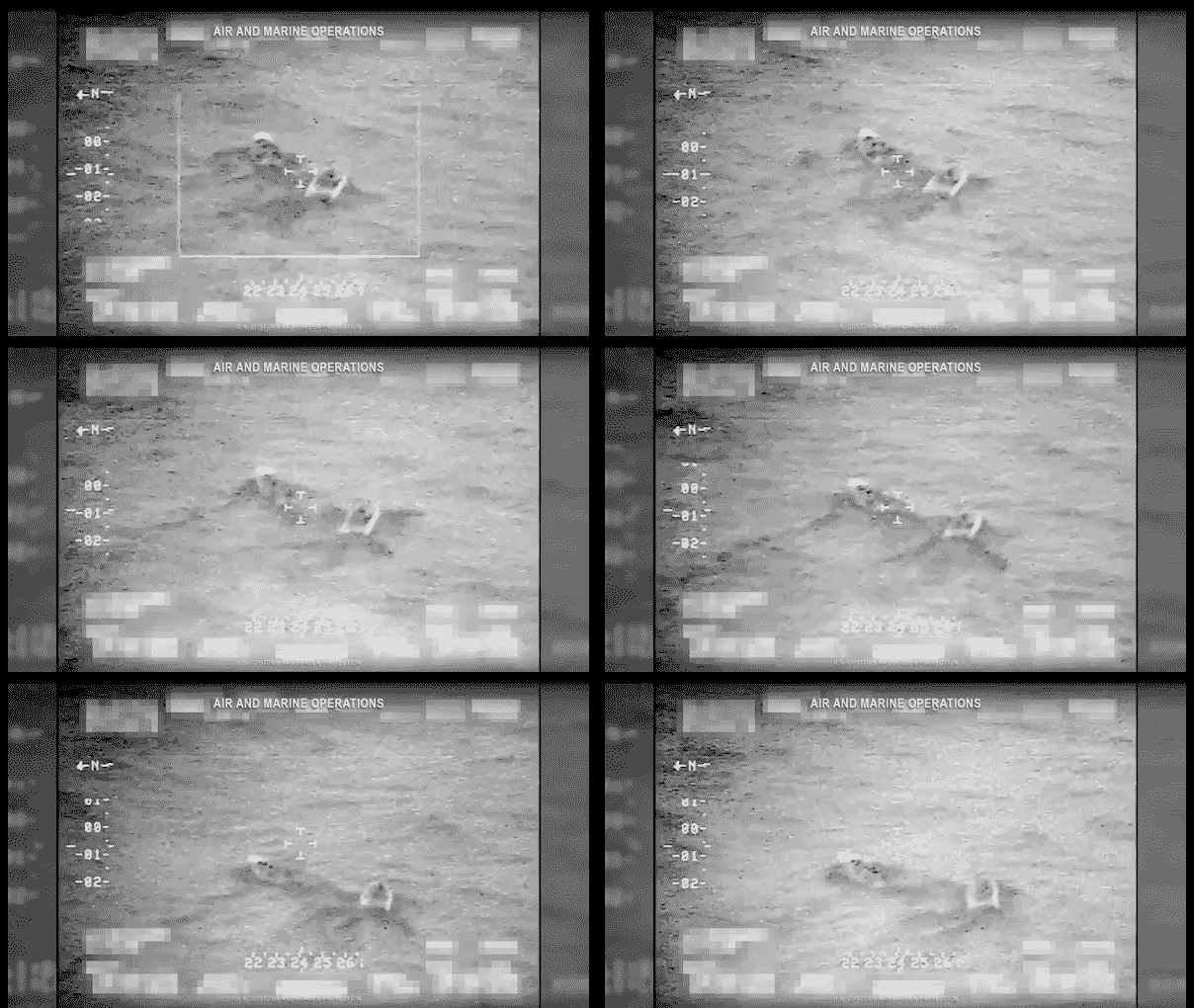
Federal law enforcement agencies recently conducted a significant maritime operation, intercepting a small vessel carrying approximately 40 individuals near Desecheo Island in the waters leading to Puerto Rico. The interception, which occurred in the early hours of June 6th, was the result of intelligence gathering by U.S. Customs and Border Protection (CBP) that detected an unusual target west of the island. The situation escalated when the vessel, initially observed by authorities as potentially disabled, began moving toward the heavily populated shoreline.
The successful apprehension required coordinated efforts between multiple government entities. Following the initial detection, information was rapidly disseminated to specialized aircrews. These air assets provided continuous surveillance, guiding a U.S. Coast Guard cutter to the location of the small, rustic boat. Once positioned, the Coast Guard successfully intercepted the vessel as it attempted to proceed toward the shore. Authorities confirmed that the apprehended group originated from various nations, including the Dominican Republic, Haiti, and Uzbekistan.
Significance of Enhanced Maritime Interdiction
This event underscores the ongoing necessity for robust, collaborative border security efforts within U.S. territorial waters. The coordinated deployment of air and sea assets demonstrates a layered approach to maritime enforcement. By combining aerial tracking with the interception capabilities of the Coast Guard, agencies are able to manage complex scenarios involving potentially vulnerable or undocumented groups at sea. The operation highlights the capacity of these federal partners to monitor and respond to unusual maritime activity in time-sensitive locations.
Operational Context and Enforcement Challenges
Maritime border enforcement presents unique operational difficulties. Unlike land-based patrols, these operations must account for unpredictable ocean conditions, distant coordinates, and the need to safely manage individuals who may be in distress or who pose security concerns. Officials coordinating the effort indicated that the intelligence provided the critical initial advantage, allowing authorities to track the vessel’s movements until the point of physical interception. The involvement of multiple agencies ensures that specialized skills—from aerial surveillance to marine boarding—are available simultaneously to ensure a safe and effective outcome.
About the Author